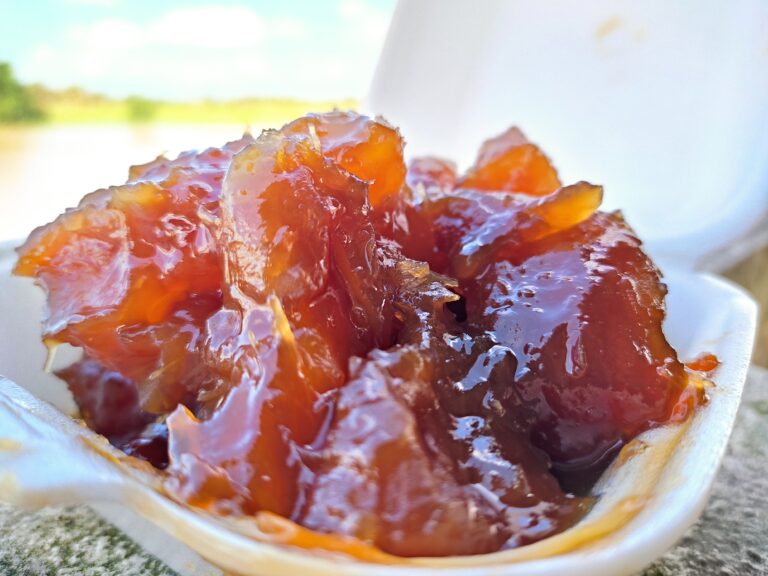
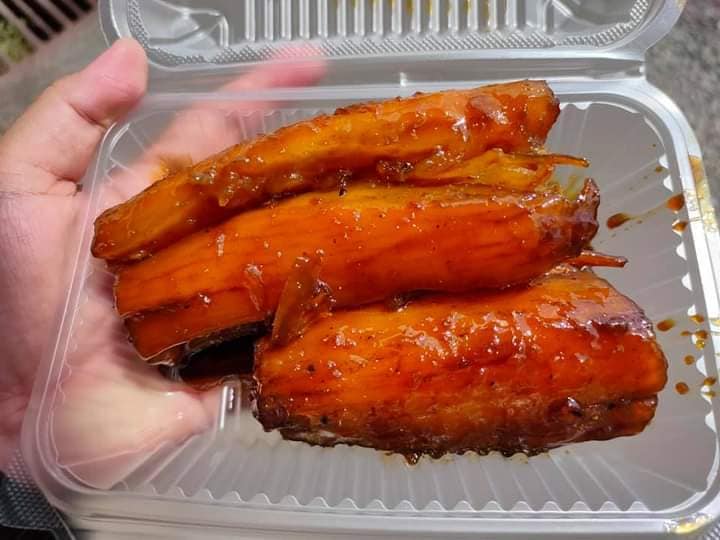
Ubi Telampong/Telampung, is a traditional Kedah delicacy rooted deeply in the villages around Jitra and Kubang Pasu. At its core, it is cassava cooked slowly in sugarcane juice, but that simple description barely captures what makes it special. This is not fast food. This is patience, smoke, and time transformed into something quietly remarkable. It is usually served as a dessert or shared snack, often enjoyed together with hot tea in a village setting.
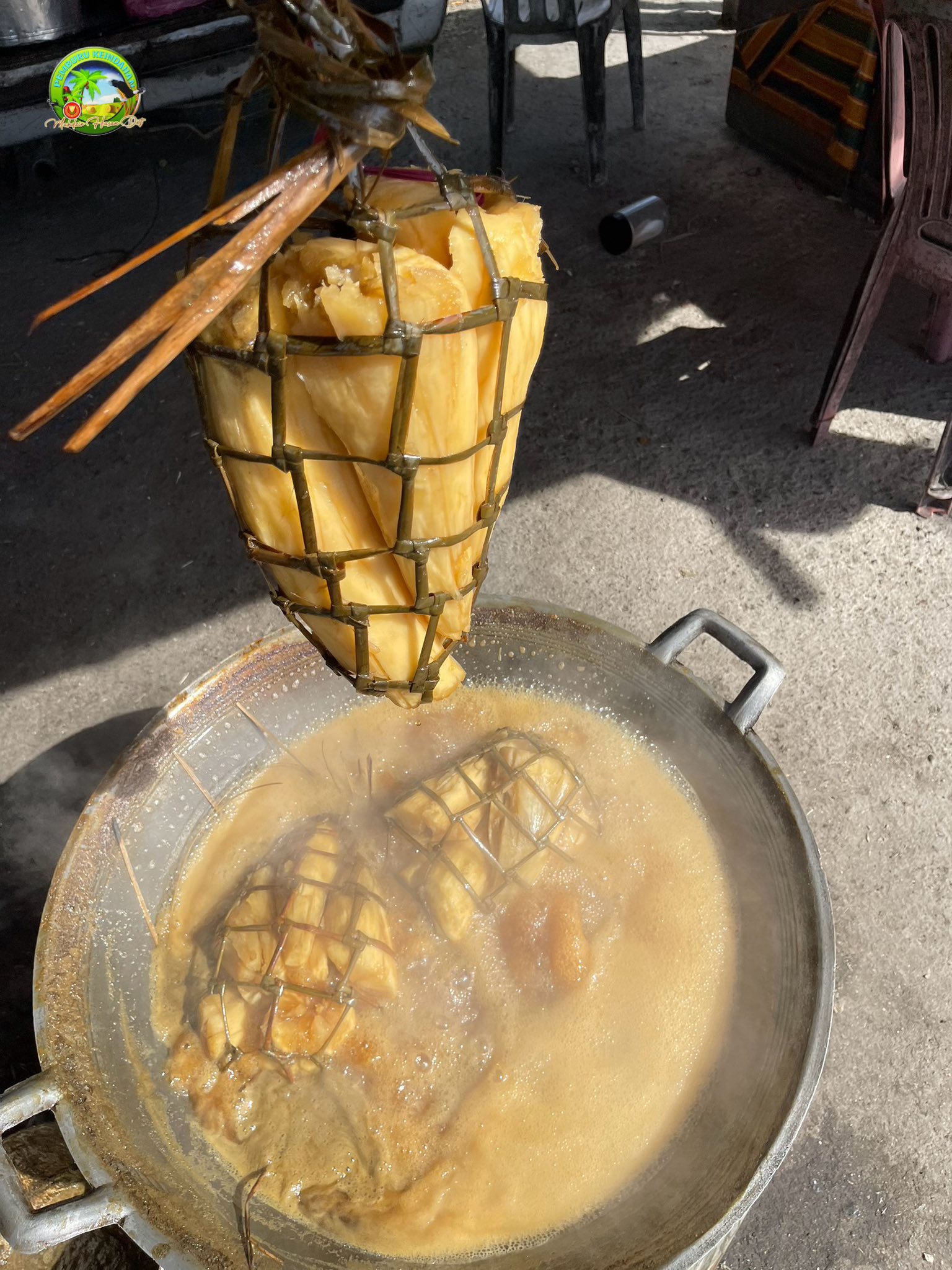
The preparation begins with freshly harvested cassava. Once peeled, it is quickly soaked in water to prevent it from turning bitter, a detail villagers describe as avoiding the tuber “masuk angin.” At the same time, sugarcane is crushed to extract its juice, and it must be done on the same day to keep it from turning sour. Both ingredients are then brought together in a large iron wok, set over a wood fire.
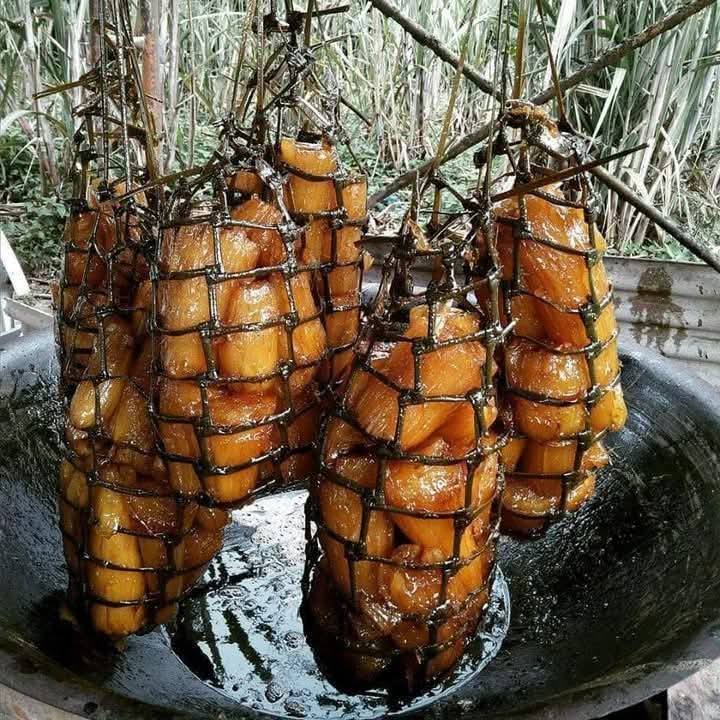
From there, the waiting begins. Five hours at minimum, sometimes stretching past eight. The fire is fed with carefully chosen wood. Rubberwood gives a steady heat, mangosteen wood adds fragrance, and rambutan wood keeps the embers alive longer. Slowly, the sugarcane juice thickens into a deep, glossy syrup known as “nisan tebu”. The cassava softens, absorbs the sweetness, and turns a rich golden brown. Each stir with the wooden ladle keeps it from sticking, but also ensures the syrup coats every piece evenly. The result is tender, slightly chewy cassava wrapped in a naturally sweet, caramelised glaze with a faint smoky aroma.
This dish carries the rhythm of village life. Traditionally, it is made during the dry season when sugarcane is at its sweetest, often after the paddy harvest. Back in the day, preparing Ubi Telampong was never a solo effort. Families and neighbours would gather, each taking on a role. Some peel cassava, others prepare the fire, while a few tend to the wok through the long hours. It becomes more than cooking. It becomes a shared experience, a quiet celebration of abundance and community.
Even the name has a story. “Telampong” is believed to come from the word pelampung, meaning float in Malay, describing how the cassava pieces appear to float in the generous amount of sugarcane liquid during cooking. A small visual detail, but one that stuck.
Today, Ubi Telampong is becoming harder to find. The process is long, demanding, and not easily adapted to modern kitchens. Still, in certain villages in Kedah, especially around Binjai and Bukit Beruas, the tradition lives on. Sometimes it appears during heritage food events or community gatherings, occasionally even sold in small batches. But more often, it is still made the old way. Shared among those who helped cook it.
If you ever come across it, take a moment. Eat it warm if you can. There is something about that soft cassava, coated in thick sugarcane sweetness with just a hint of wood smoke. It is not just a dessert. It feels like time itself, slowed down and served on a plate.