Kuih Qasidah: The Malay Custard Dessert Served with Fried Shallots
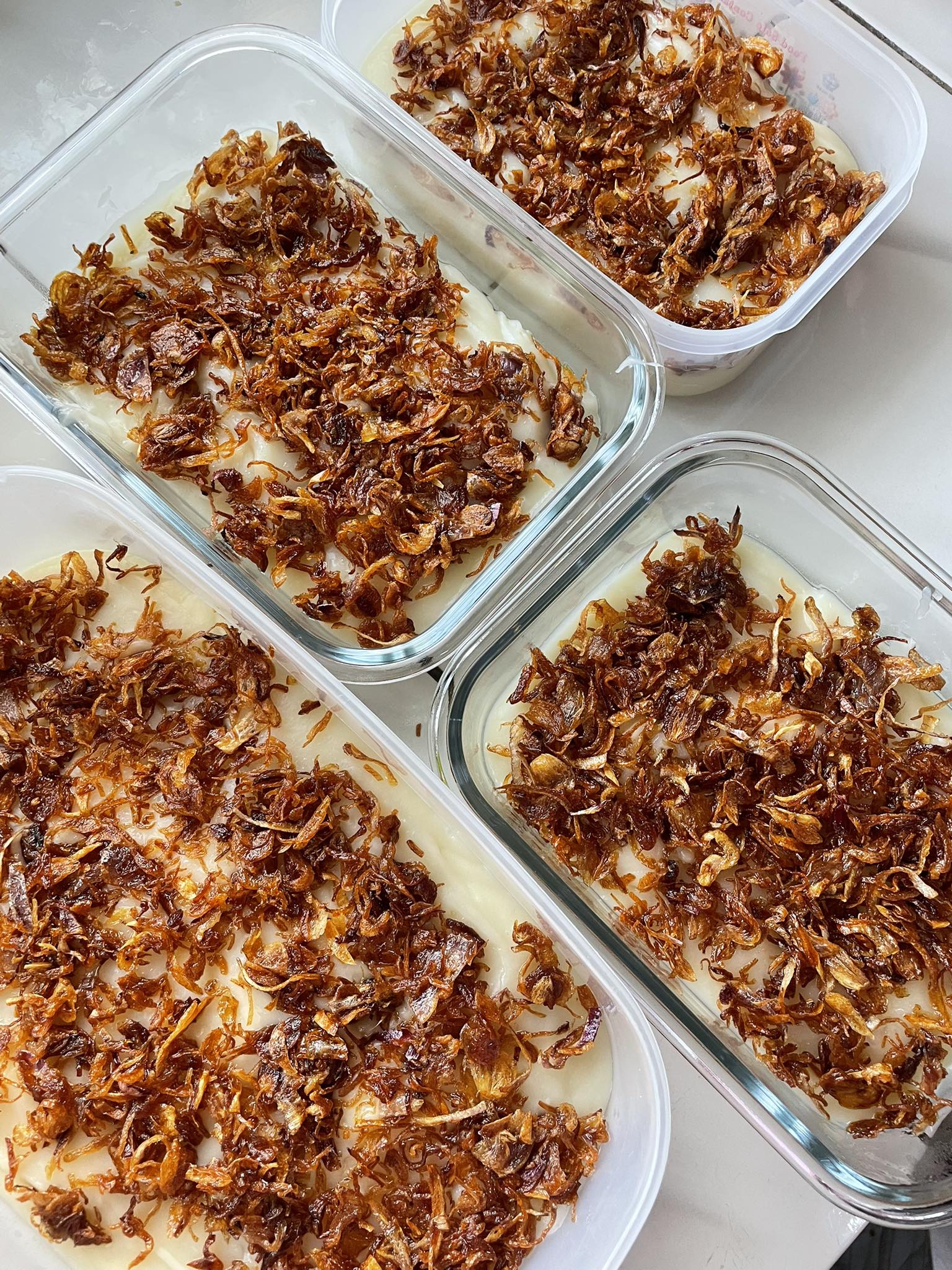
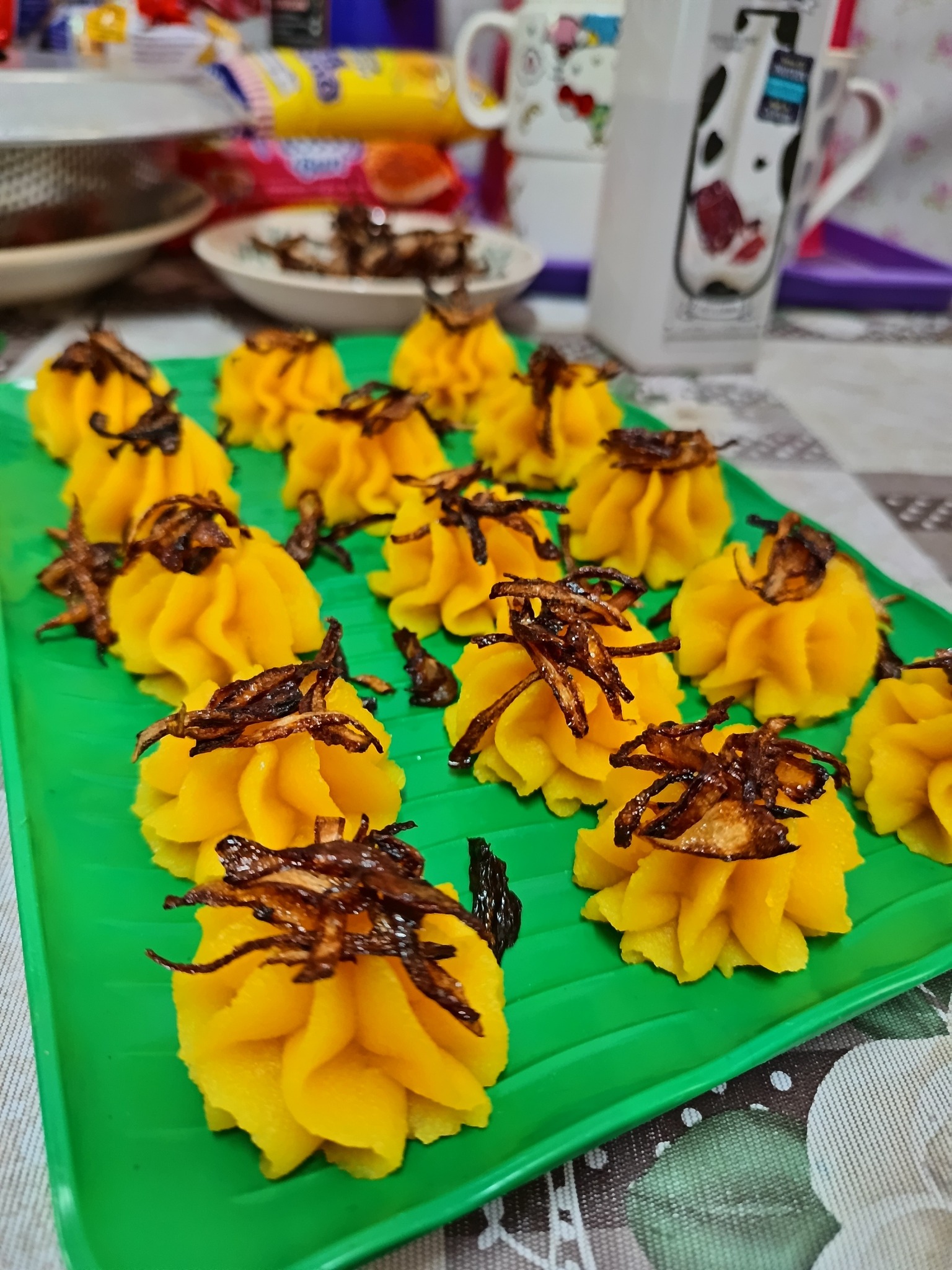
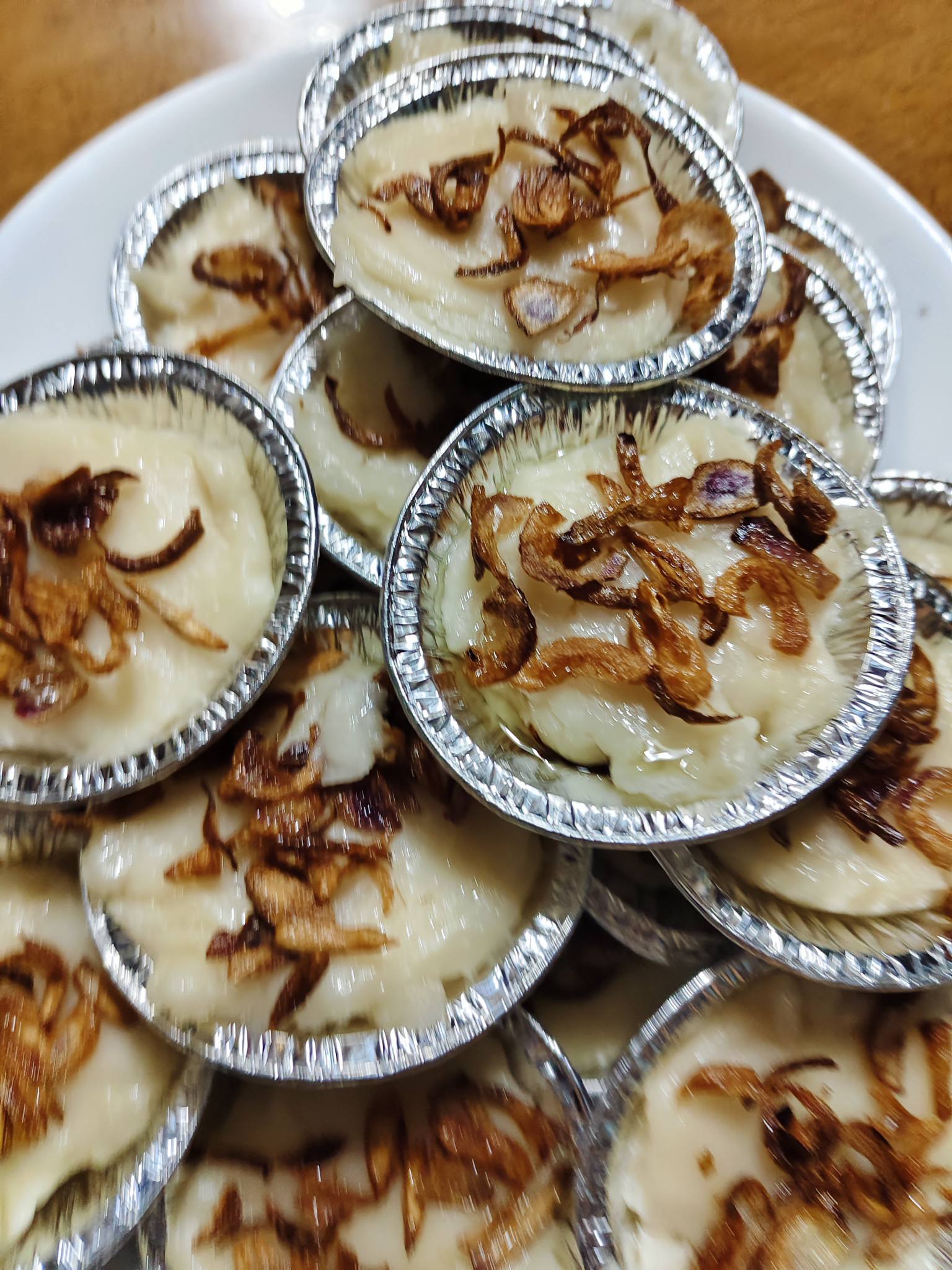
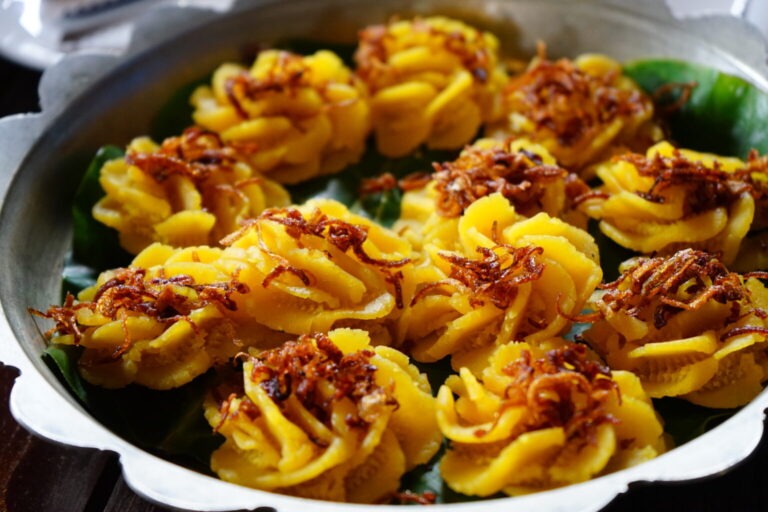
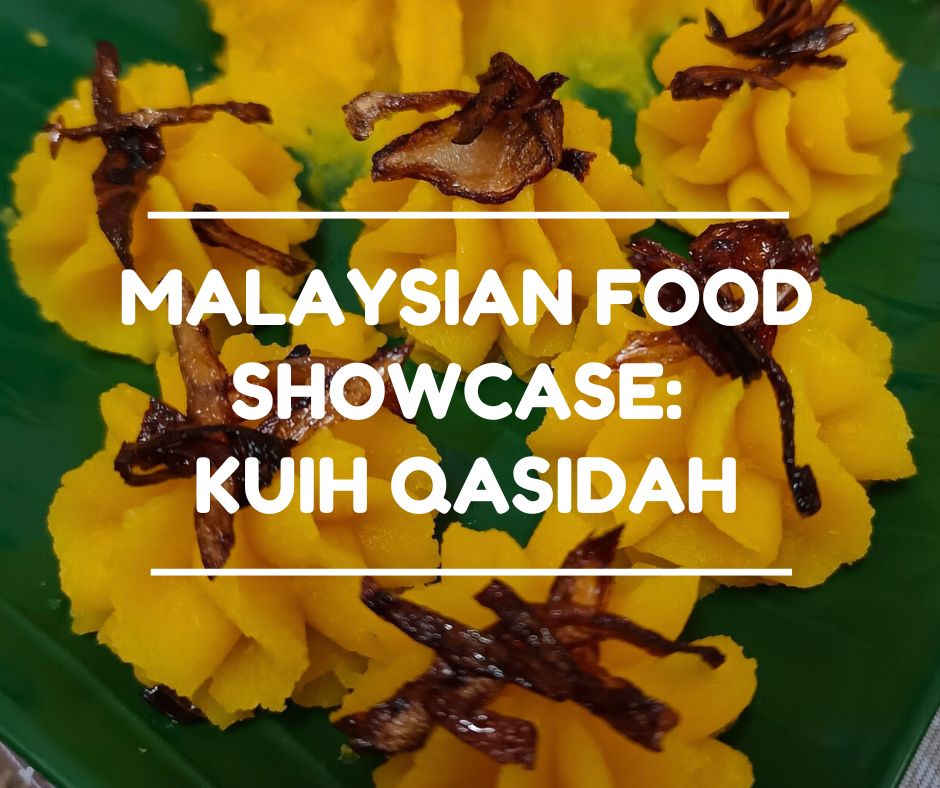
Kuih Qasidah (or Kuih Hasidah) is one of those traditional Malay kuih that immediately signals something old, careful, and unhurried. Closely associated with Kedah in the north and Terengganu on the east coast, it is a kuih most people recognise by sight but rarely see outside of Ramadan. Set in shallow trays or moulded into floral shapes, smooth and glossy, it is always finished with an unmistakable topping of fried shallots.
At its core, Kuih Qasidah is a flour-based kuih cooked slowly into a dense, soft, almost custard-like mass. Wheat flour is mixed with water, sugar, a pinch of salt, and slaked lime water (not to be confused with the citrus lime), then cooked over low heat while being stirred constantly. This is not a five-minute job. Traditional makers often stir the mixture for thirty to forty minutes, never leaving the pot, ensuring it does not clump or burn. Slaked lime water plays a crucial role here. It helps the mixture bind evenly, improves its sheen, and gives the kuih a slight natural yellow tint.
Once the mixture begins to thicken, coconut milk and pandan leaves are added. The santan gives richness and body, while pandan brings a gentle fragrance that softens the sweetness. When fully cooked, the mixture turns glossy and elastic, then is poured into trays or pressed into moulds, sometimes shaped into floral patterns using traditional pincers. These decorative versions are often reserved for kenduri or formal gatherings, where presentation matters as much as flavour.
The final touch is what surprises first-timers. Thinly sliced shallots are fried until golden and fragrant, often in ghee in the East Coast version. Some makers toss the fried shallots lightly with sugar before scattering them over the kuih. This small detail matters. The sweetness of the kuih meets the savoury aroma of shallots, creating a balance that feels deliberate rather than odd. It is this contrast that defines Kuih Qasidah’s character.
Historically, Kuih Qasidah is believed, through oral tradition, to have links to the Arab world. It is said to have been introduced by Arab-descended communities who migrated and settled in the Malay Peninsula. The name itself suggests this influence, although the exact linguistic journey of the word “qasidah” into a kuih name remains unclear. What is certain is that the dish was absorbed into Malay food culture and reshaped by local ingredients, tastes, and customs, eventually becoming a recognised traditional kuih in Kedah and Terengganu.
Over time, two regional versions became established. In the northern states such as Kedah, Kuih Qasidah is typically pale, sometimes almost translucent, with a cleaner, lighter appearance. Lime water is more prominent here, and the flavour feels restrained. In Terengganu and the East Coast, the kuih tends to be richer and more yellow, with generous use of egg, ghee, coconut milk and unfortunately, yellow food colouring. Some locals even refer to this version as more “berlauk” in character, due to the heavier, savoury undertones from the fat and shallots. Both versions are recognised as authentic, each reflecting regional taste preferences rather than strict rules.
Culturally, Kuih Qasidah is deeply tied to Ramadan. It was traditionally prepared as a breaking-of-fast dish, valued for its sweetness and richness after a long day without food. Making it was rarely a solitary act. Families and neighbours would gather, taking turns to stir the pot, turning the long cooking process into a social ritual. This is partly why Kuih Qasidah is so closely associated with older generations. Many elders still speak fondly of it, even while acknowledging that its richness means it should be eaten in moderation.
Today, Kuih Qasidah is no longer an everyday kuih, but it has not disappeared. It remains most visible at Ramadan bazaars in Kedah, Terengganu and nearby states, usually sold by veteran kuih makers who have kept the technique alive. Some producers now offer it as a simple afternoon tea snack, served at room temperature with hot tea or black coffee. Its presence may be quieter now, but its identity remains intact.