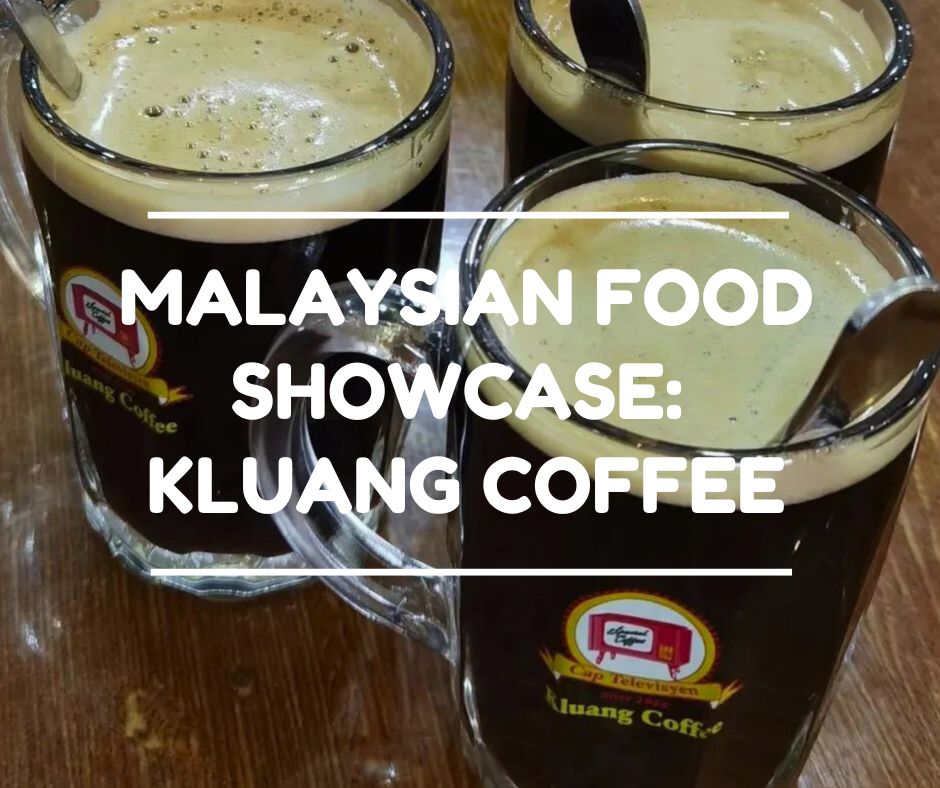
Kluang Coffee: The Traditional Kopitiam Pour of Johor
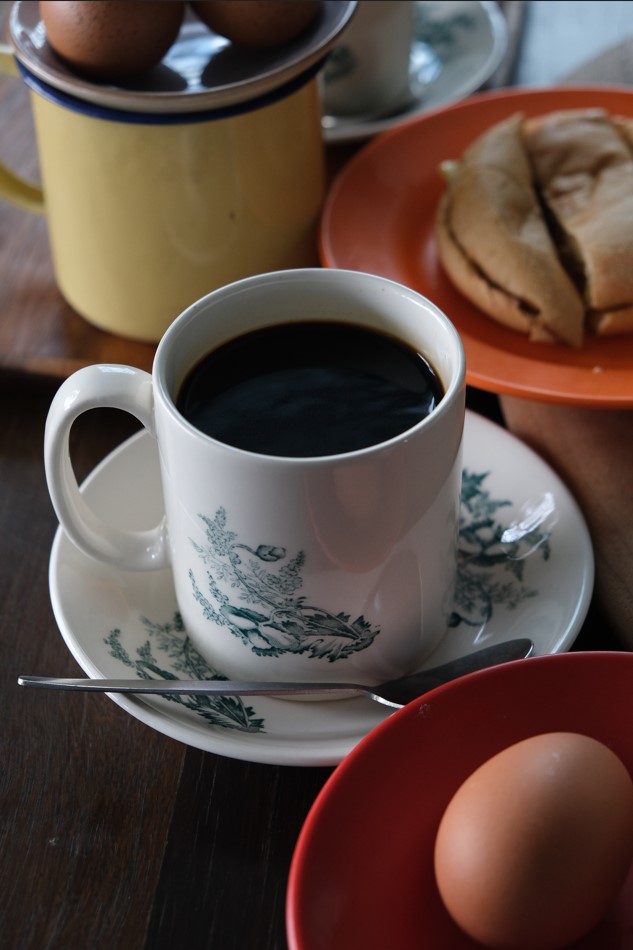
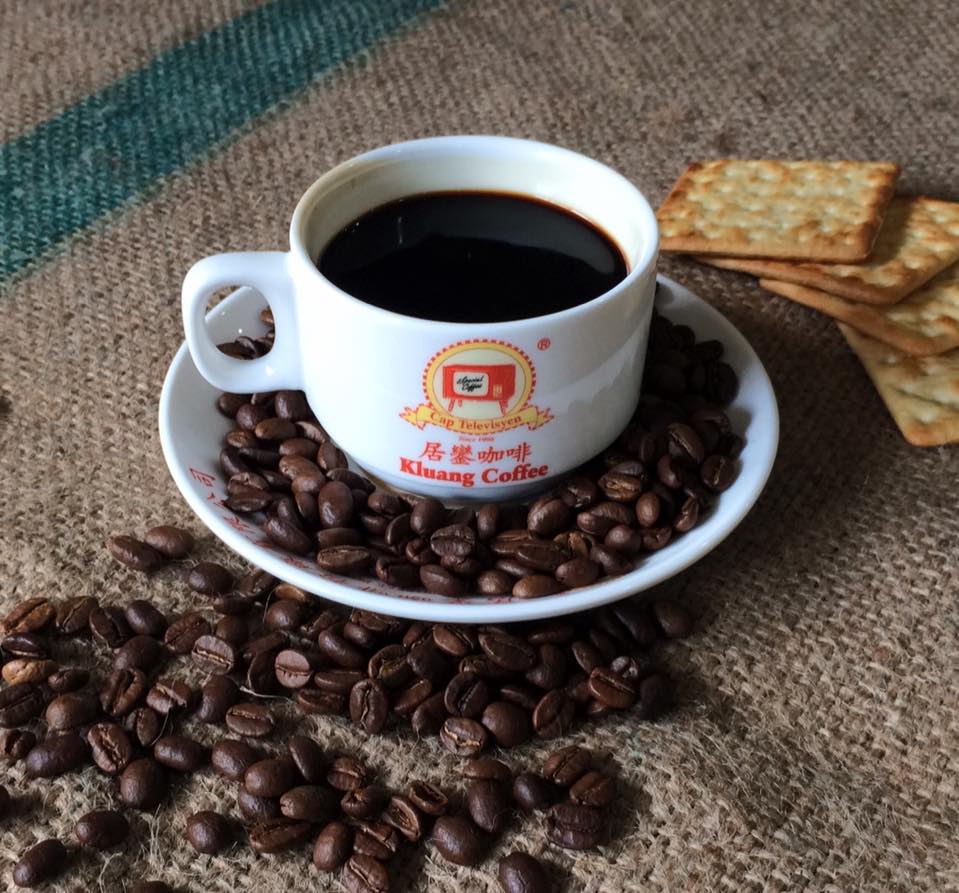
Kluang Coffee is a style of Malaysian kopi that grew out of a small railway town of Kluang, Johor, and it quietly shaped how generations there drink their coffee. Thick, dark, aromatic, and almost chewy on the tongue, this is kopi that leans firmly into the idea of “kaw”, not refined or delicate, but deeply satisfying in a very grounded, everyday way.
What defines Kluang Coffee most clearly is its blend. Instead of spotlighting one type of coffee bean, Kluang-style coffee typically combines Robusta, Arabica, and Liberica. Robusta gives the drink its backbone and caffeine kick. Arabica softens the edges with fragrance. Liberica, the least common of the three, anchors the flavour with a bold, slightly smoky aroma that lingers long after the cup is empty. This Liberica presence is crucial. It is what gives southern Malaysian coffee, especially in Johor, its recognisable depth.
The roasting method is just as important as the beans. In the traditional Kluang approach, coffee is roasted with sugar and fat, usually margarine or vegetable oil. The sugar caramelises during roasting, coating the beans and contributing to the coffee’s body and colour. The fat rounds out the bitterness and gives the brew a heavier mouthfeel. This is not coffee meant to be drunk lightly. When brewed, it is opaque, almost inky, and releases a warm, toasty aroma even before it reaches the table.
In kopitiams around Kluang, this coffee is brewed strong and fast. Hot water is poured over the grounds, strained through a cloth sock, and often poured from height to aerate the brew. Kluang locals judge a good cup of Kluang coffee by whether it is smooth or “shun (顺)”, meaning it goes down easily without harsh bitterness or sour notes.
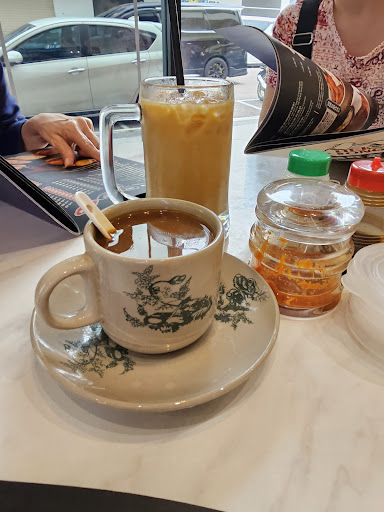
Because the base brew is so strong, Kluang coffee adapts well to different styles. Kopi-o highlights the roast and the Liberica aroma. Kopi with milk becomes thick and comforting rather than sweet-heavy. Cham, the mix of coffee and tea, is especially popular when iced. In Kluang, iced cham made with this style of coffee is famously intense, the coffee and tea weaving together instead of competing, perfect for the midday heat.
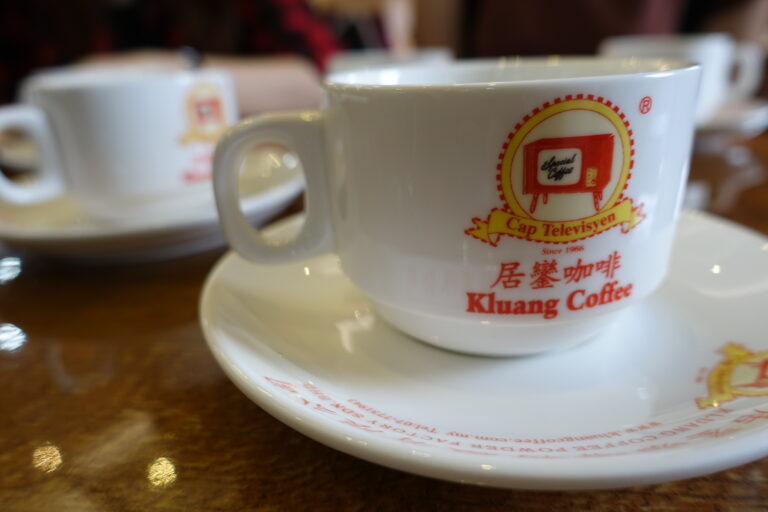
Most kopitiams in Kluang rely on locally roasted coffee powder, with Kluang Coffee Powder Factory being the most recognized and widely-used supplier. The Kluang Coffee Powder Factory was founded by Mr. Goh Tong Tor in 1966. His ambition was to create a coffee brand that people would gather around, akin to having a TV at home around the 60s, thus Cap Televisyen or TV Brand was born. The beans are roasted the old way over firewood, and timing here is everything. Roast too long and the coffee turns harsh. Too short and sourness creeps in. Once done, the beans are quickly cooled, broken apart, ground, and packed. Every batch is brewed and tasted. Its blend and roasting style have become so embedded in daily life that many people simply associate Kluang Coffee’s flavour with “how coffee is supposed to taste” in town.
However, Kluang Coffee did not emerge purely out of a factory. Its story actually begins way before in 1938, inside the Kluang Railway Station. Hainanese immigrant Lim Luan Hee opened a canteen to serve British soldiers and train travellers passing through the town. He brought with him a particular way of handling coffee. This is coffee shaped not by trends, but by routine, and decades of repetition done right. It is the kind of coffee that wakes you up before you even take a sip. Strong brews, poured from height, built for long mornings and longer conversations. Back then when jam supplies were scarce, he also made his own version of jam, using coconut milk, eggs, and sugar, and kaya was created. Kaya toast pairing with Kluang Coffee eventually became the foundation of what Kluang locals recognise as their kopitiam culture.
Today, both legacies continue side by side. Kluang Rail Coffee remains inside the station, still serving coffee much as it did decades ago. Old tables, old chairs, and the familiar rhythm of brewing fill the space. Regulars include railway workers, locals, and even the Sultan of Johor, who is known to make personal visits. Meanwhile, Cap Televisyen has grown into a major brand across Johor and beyond, producing thousands of kilograms of coffee powder daily while still maintaining its traditional roasting methods.
What makes Kluang coffee special is not innovation, but consistency. It is coffee shaped by routine. Morning cups before work, afternoon refills after lunch, late chats over toast and kaya. It pairs naturally with kaya toast, cream crackers, soft-boiled eggs or nasi lemak. Nothing fancy. Nothing rushed.
In a time when coffee often comes with tasting notes and equipment lists, Kluang coffee quietly holds its ground. It reminds you that coffee can simply be strong, fragrant, and familiar, something made to be shared, argued over, and returned to day after day. If you want to understand the heartbeat of Kluang, start with its coffee. One cup is usually enough to tell the whole story.