Lemang Kelamai: A Bamboo-Baked Rice Cake from Perak
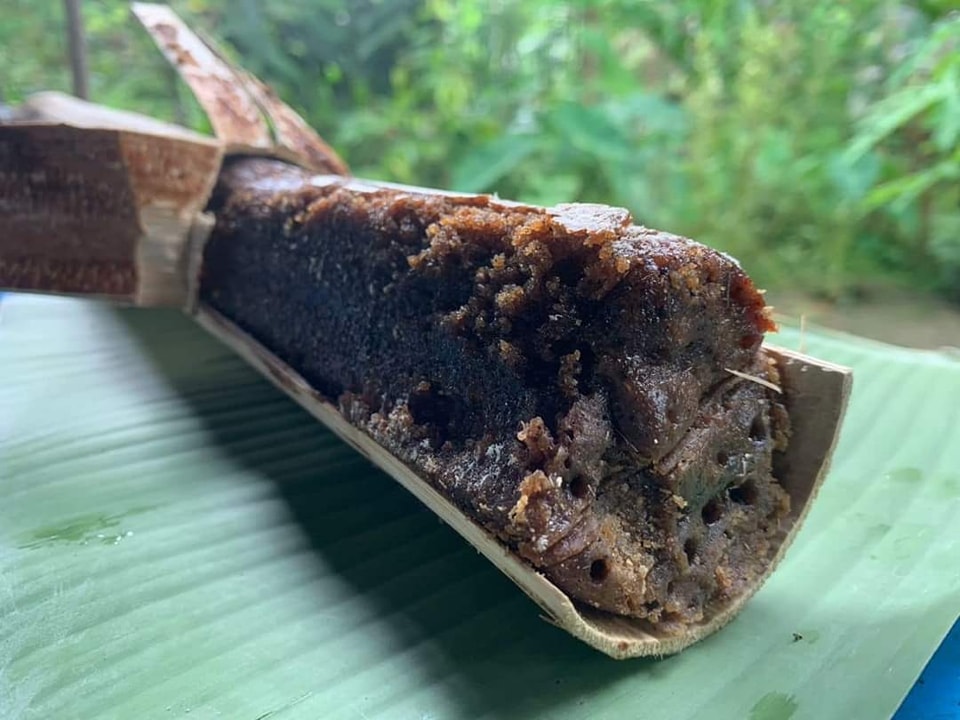
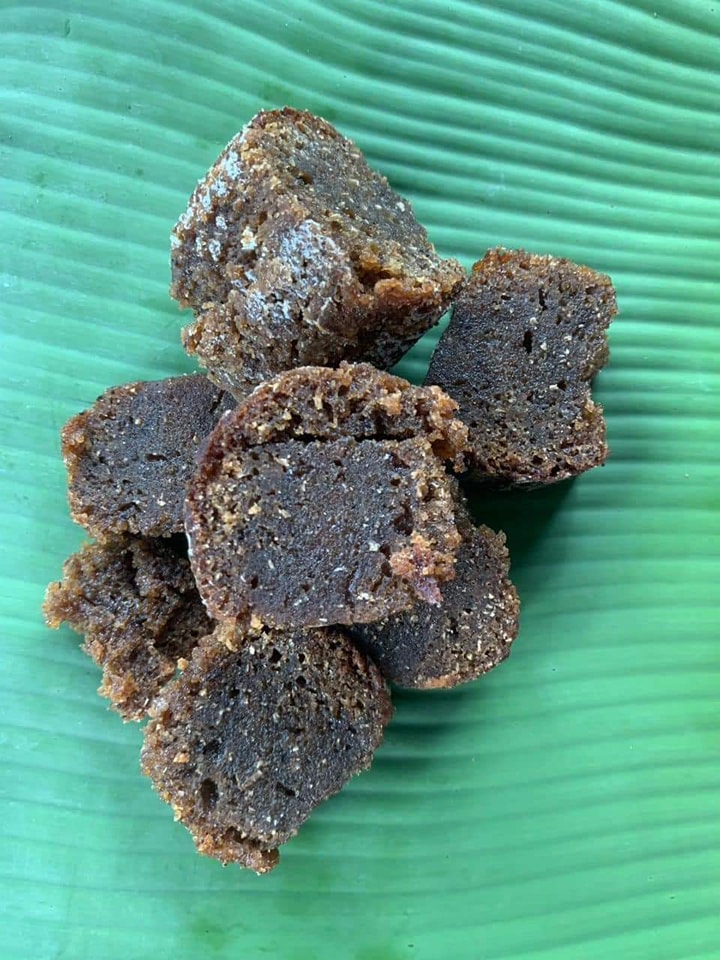
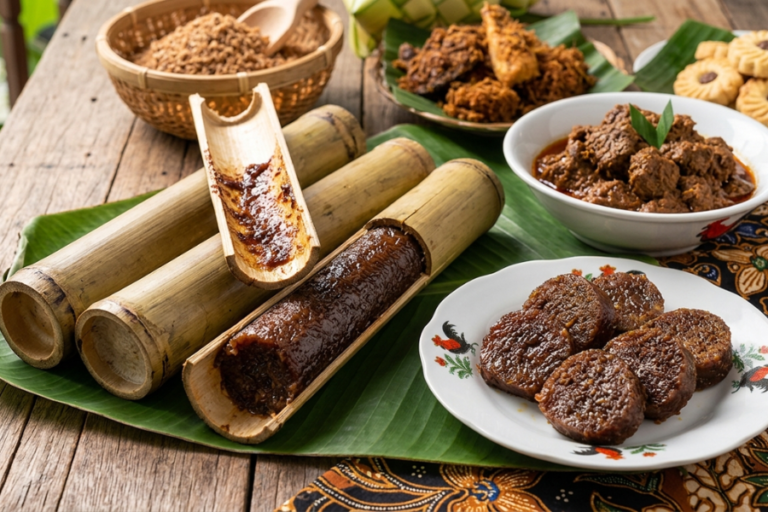
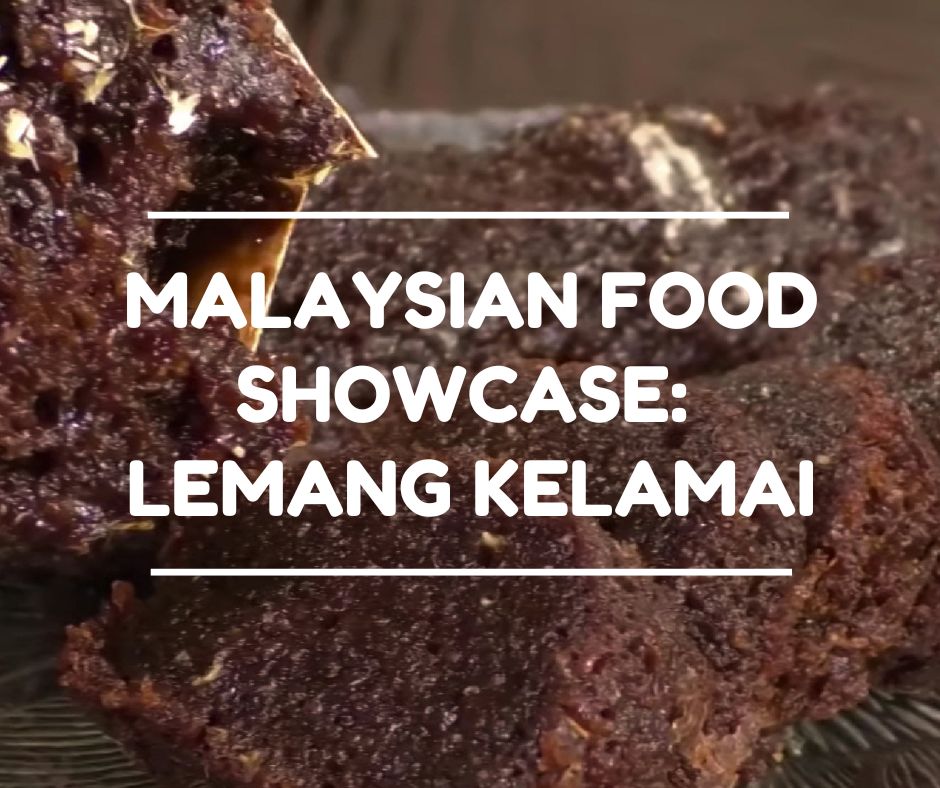
Lemang Kelamai (sometimes called Kelamai Rawa/Rao or simply just Kelamai) is a traditional kuih deeply rooted in the southern regions of Perak, particularly in places like Gopeng, Kampar, and Tapah. At a glance, it resembles dodol with its dark, glossy appearance and chewy texture. But the moment you learn how it is made, you realise it belongs to the lemang category, one that’s connected to the Rawa/Rao community.
This is not a kuih you make on a whim. Lemang Kelamai demands time, patience, and a level of skill that has been passed down through generations.
The process begins with glutinous rice, which is first dried and ground before being mixed with sugar. Unlike dodol or lemang, this mixture is not cooked immediately. It is left to rest, sometimes for up to three days. This resting phase is essential, helping the mixture develop its structure and even influencing the patterns seen when the Lemang Kelamai is eventually sliced.
Coconut plays an unusually complex role here. It is not just added as santan. Instead, it is transformed into multiple forms. Fresh coconut milk is slowly heated until it becomes “tahi minyak”, a rich, oily residue. Grated coconut is toasted into kerisik. At the same time, fresh santan is retained for mixing. This layered use of coconut is one of the defining features that sets Lemang Kelamai apart from both dodol and the common lemang.
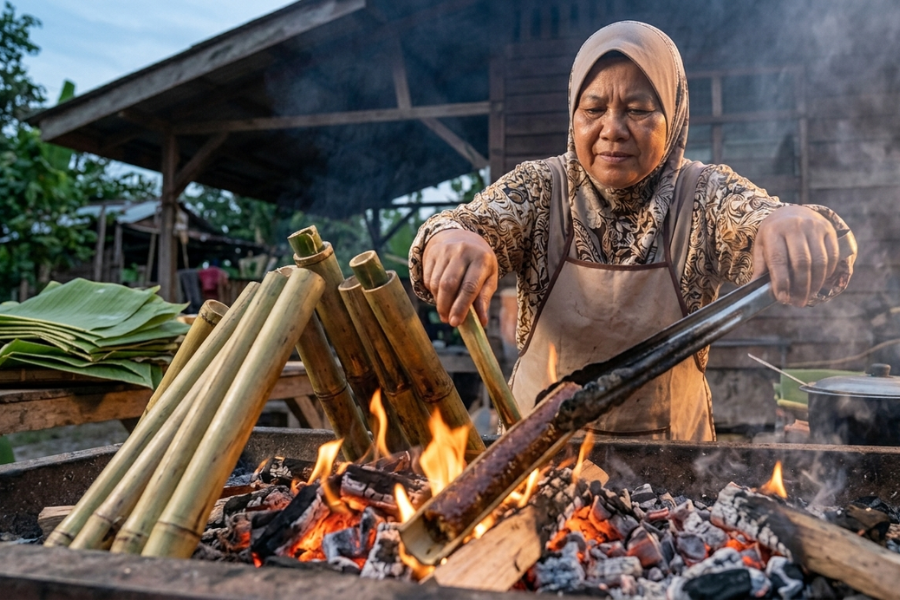
Once all components are ready, the mixture is cooked and stirred continuously for at least an hour until thick and sticky. Then comes the defining stage. The batter is carefully poured into buluh aur, a type of bamboo found near riverbanks. Unlike lemang bamboo, the skin is removed, and the bamboo is softened beforehand. Each section typically uses two bamboo nodes, specially prepared to hold the mixture securely.
The bamboo is then placed over fire and slowly rotated for five to eight hours. This step requires constant attention. Too much heat, and the outer layer burns. Too little, and the inside remains undercooked. After cooking, the Lemang Kelamai is not immediately eaten. It is left to cool for one to two days, allowing the texture to settle into its signature chewy softness.
Lemang Kelamai traces its roots back to the Rawa/Rao people, a Minangkabau subgroup from Rao Mapat Tunggul in West Sumatra. Their migration to the Malay Peninsula, particularly during the Padri War between 1816 and 1833, brought with it not just people, but food traditions shaped by survival and movement. Lemang Kelamai was one such food, designed to last. In fact, it can be stored for up to six months, far longer than lemang or even dodol.
As the Rawa community settled along river routes such as Sungai Perak, Sungai Bidor, and Sungai Bernam, and later in towns driven by tin and gold mining like Kampar and Teluk Intan, Lemang Kelamai became part of their cultural identity. Its preparation often involved the entire community, reinforcing the spirit of gotong-royong that defined their way of life.
Today, Lemang Kelamai is most commonly prepared during Hari Raya Aidilfitri and special occasions like weddings. It is rarely made casually, largely because of its demanding process, which can take up to three days from start to finish. This complexity, while part of its beauty, has also contributed to its decline. Many younger people are unfamiliar with the techniques, and fewer households are willing to invest the time required.
Still, for those who grew up with it, Lemang Kelamai carries something deeper than taste. There is the faint smokiness from bamboo, the richness of coconut in its many forms, and that slow, satisfying chew. If it hardens over time, it can always be steamed back to life, sometimes served with freshly grated coconut.
Lemang Kelamai is not just another festive kuih. It is a reflection of migration, adaptation, and community. And like many traditional foods, its survival depends on whether the next generation is willing to keep the fire going, quite literally, for hours at a time.