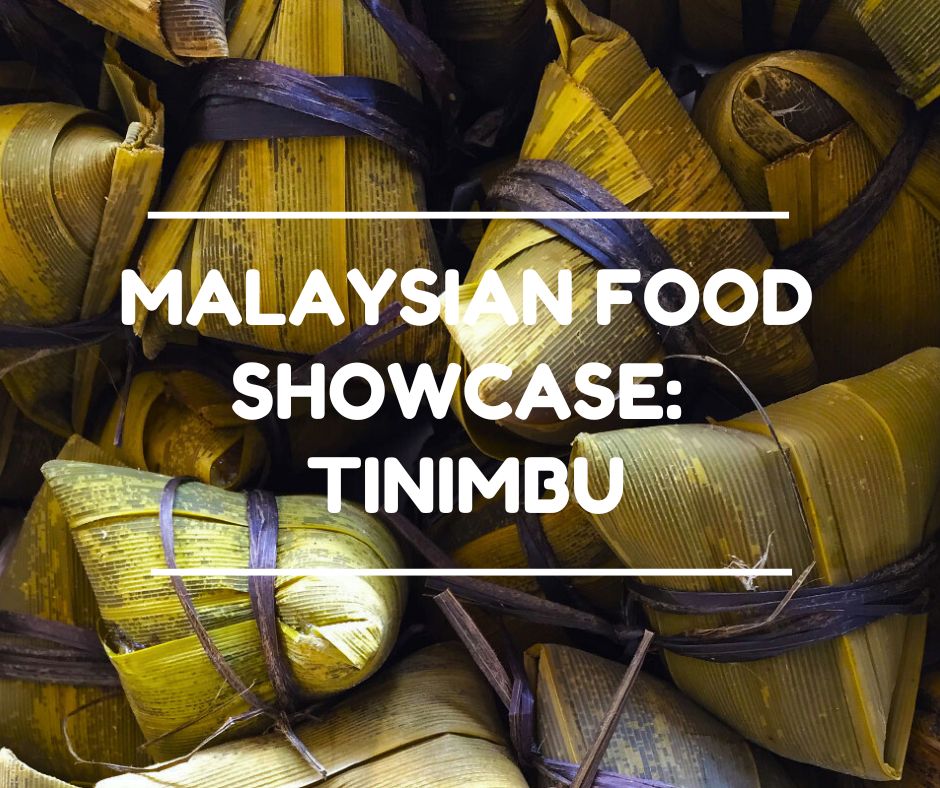
Tinimbu: The Tatana Rice Dumpling of Kuala Penyu
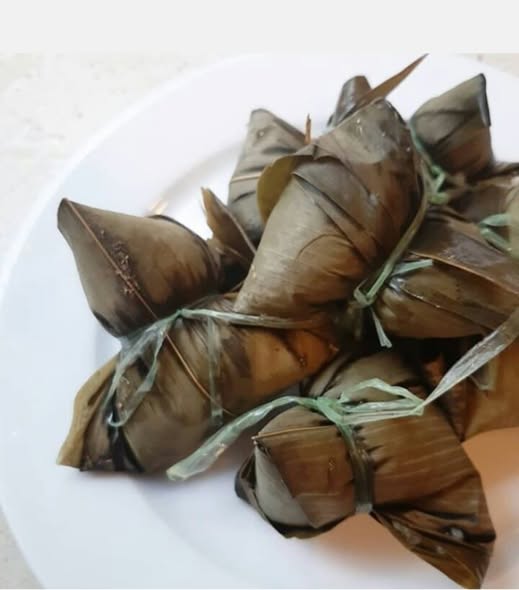
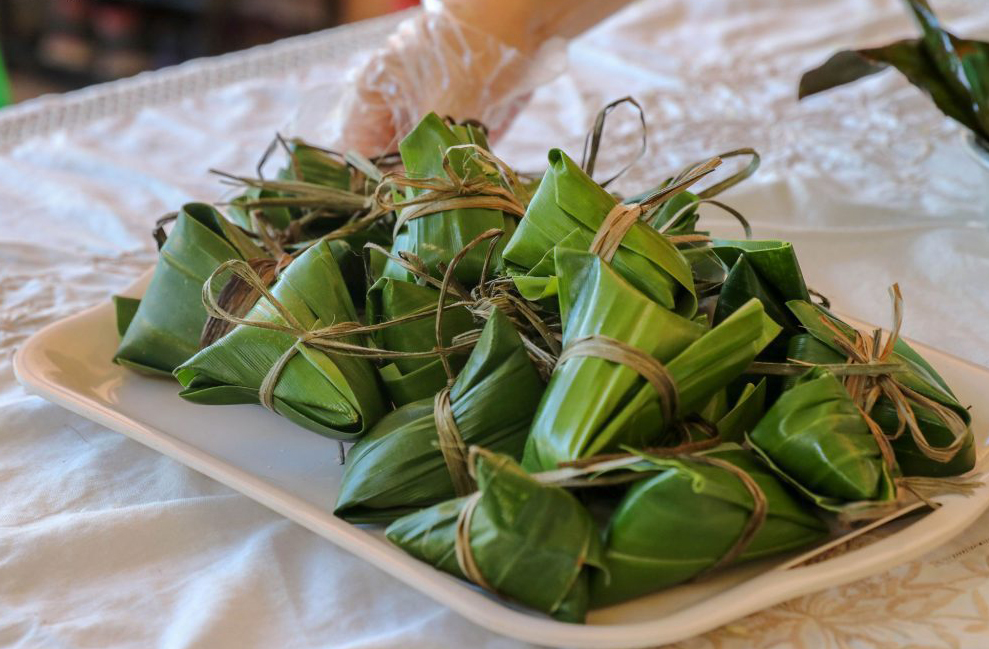
Tinimbu (also known as Tinimbuh, or Kuih Kocong) is a glutinous rice dumpling closely associated with the Dusun Tatana community of Kuala Penyu, Sabah. At first glance, it looks like a miniature version of a Chinese Bak Chang. Triangular, leaf-wrapped, and neatly tied, it invites direct comparison almost immediately. But Tinimbu is not a mere imitation, it is a dish shaped by centuries of cultural blending, quietly rooted in Tatana life.
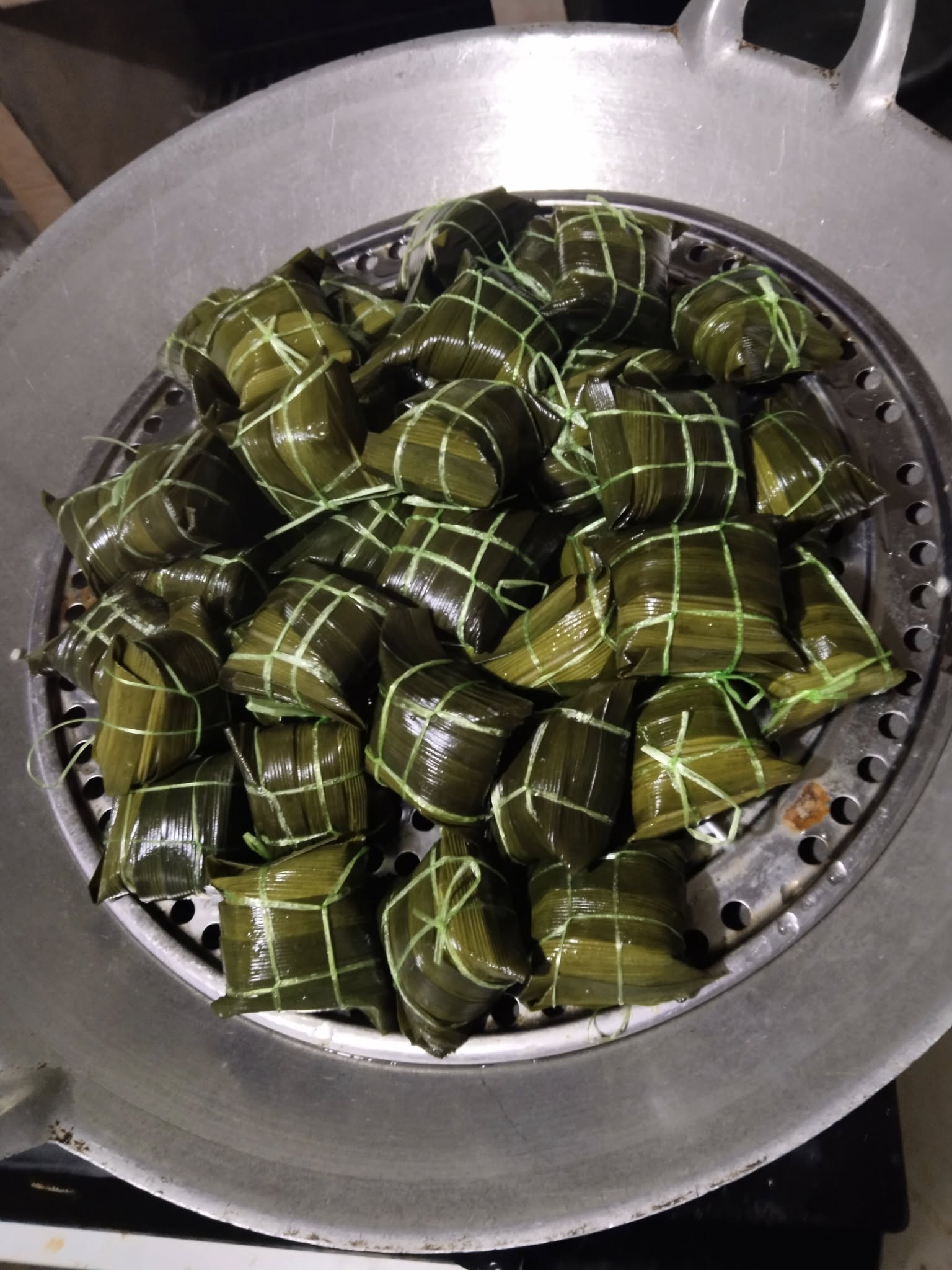
Traditionally, Tinimbu is made from glutinous rice wrapped in pandan or bamboo leaves and tied with lamba vine. The rice is washed thoroughly and sometimes mixed with natural colouring until the grains turn a soft yellowish hue. traditionally, the rice is wrapped raw without stir-frying, and then boiled, allowing the natural aroma of pandan leaf to seep directly into the rice. There was no filling. The result is soft, sticky, and gently fragrant, with a clean, almost calming simplicity.
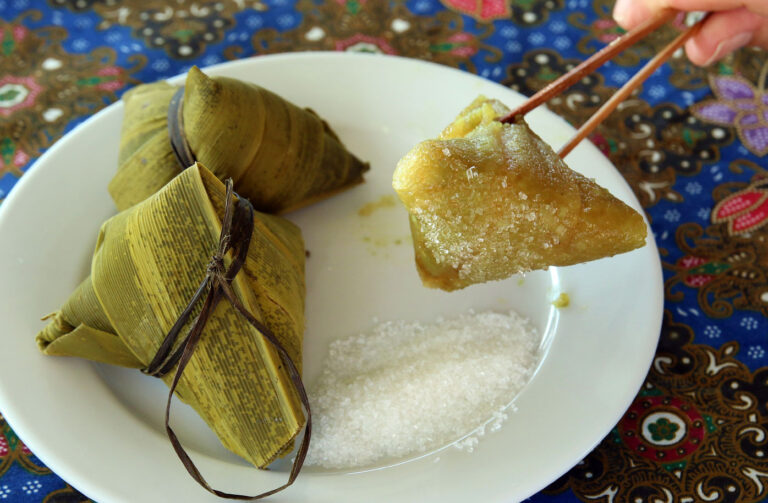
Eating Tinimbu is part of its charm. Among the Tatana, it is traditionally lifted using candas, special chopsticks made from bamboo or sago stalk, rather than eaten by hand. The most common way is to dip the dumpling into coarse sugar, letting the crystals melt slightly against the warm rice. Some households prefer it with anchovies sambal, others alongside a cup of black coffee. And in some homes, the plain Tinimbu is dipped into peanut sauce. Different strokes for different folks, as the saying goes.
The story of Tinimbu is inseparable from the history of the Dusun Tatana themselves. Kuala Penyu was one of the closest ports to China in Sabah, and Chinese traders began settling there more than 250 years ago. Intermarriage followed, bringing together foodways, beliefs, and rituals. Over time, the Tatana adopted many aspects of Chinese culture, including the celebration of Chinese New Year as their main annual festival instead of Kaamatan. Tinimbu, along with Kuih Bakul or Pinapong, became an essential part of New Year preparations and ancestral worship.
The alternate name of Kuih Kocong adds another layer to this story. Across Sabah, the name Kuih Kocong (based on the Chinese word of Guo Zong 裹粽) refers broadly to leaf-wrapped glutinous rice dumplings, and many versions actually exist beyond Kuala Penyu. In other communities, Kuih Kocong often comes with fillings such as crushed peanuts, shrimps, chicken or beef. These versions are widely adapted and enjoyed by the non-Chinese communities in Sabah as well, showing how the form travels easily across ethnic lines, even as meanings shift.
Within the Tatana context, however, the plain, unfilled Tinimbu remains the reference point. That said, modern variations are increasingly common. Some families prepare Tinimbu by stir-frying fillings like garlic, ginger, onions, mushrooms, beans, or diced chicken, then layering them into the rice. The rice itself may be fried with soy sauce before wrapping, a technique borrowed from Chinese dumpling-making. Stir-frying beforehand not only adds flavour but also coats the grains with oil, preventing them from sticking to the leaves. Each household has its own version, shaped by memory, preference, and whatever ingredients are on hand.
Tinimbu was once a food made mainly for celebrating Chinese New Year in Kuala Penyu, but now it can be found throughout the year there. Tinimbu has become a local signature, something people point to with quiet pride. It is sold, shared, and served as both a daily snack and a marker of Tatana identity.
Tinimbu is best eaten warm, just after unwrapping the leaves, when the scent of pandan still clings to the rice. Dip it in sugar, peanut sauce, or sambal. Drink your coffee slowly. In that small, sticky triangle, you taste not just glutinous rice, but the long, patient history of people, ports, marriages, and kitchens coming together in Kuala Penyu.