Chicken Rice Balls: A Tasty Fusion of Heritage from Melaka


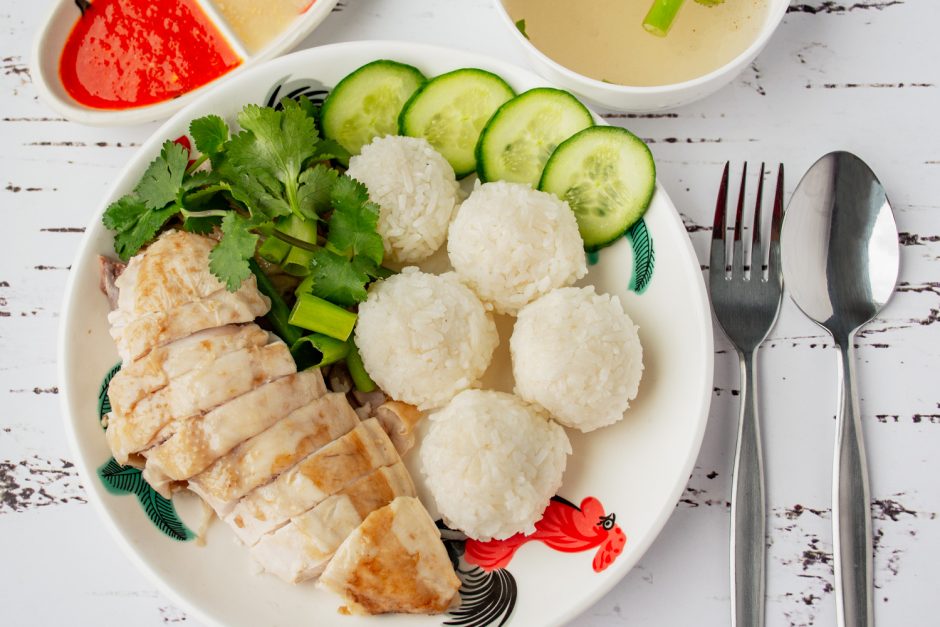
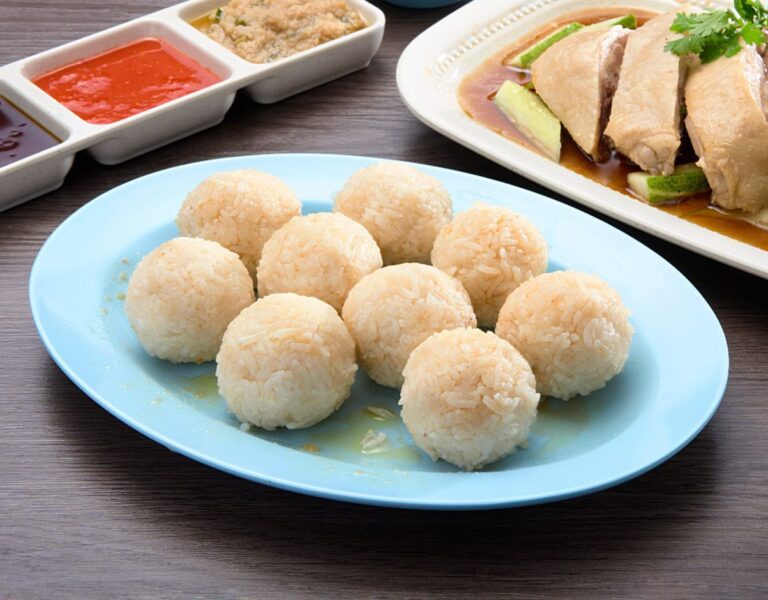
Chicken Rice Balls 鸡饭粒 are one of Melaka’s most recognizable food icons. At first glance, it looks like ordinary Hainanese chicken rice, until you notice the rice is not spread loosely across a plate but rolled into tight little spheres, almost like ping pong balls. Order it in Melaka and the auntie might ask you, “how many balls?” To the uninitiated, it can be confusing. To locals, it is completely normal. Five or six balls usually make a portion.
The rice begins just like classic Hainanese chicken rice, but with a small portion of glutinous rice mixed in instead for moldability. The rice is washed and cooked in rich chicken broth, perfumed with garlic and ginger, sometimes knotted pandan leaf. Traditionally, chicken fat is rendered and stirred through the rice to give it gloss and structure. The critical moment comes right after cooking. While the rice is still steaming hot, someone has to shape it by hand. Quickly. The grains are pressed firmly together into compact spheres before they cool and lose their stickiness. It is painstaking work. Hours of shaping. Hands enduring heat. This is why, at one point, some shops stopped selling chicken rice balls altogether. Too much labour.
The chicken itself is usually poached whole with ginger and spring onion, then plunged into cold water to achieve that smooth, almost silky skin Hainanese chicken is known for. Some shops offer roasted chicken, its caramelized skin adding a smoky edge. On the side come cucumber slices, a sharp chili sauce made with fresh chilies and lime, and a ginger-scallion oil that smells nutty and warm. Dark soy sauce is drizzled over just before eating. Locals will tell you to split the rice ball in half first, let the sauce soak in, then take a bite. That first mouthful carries the gentle bounce of compressed rice and the aroma of concentrated chicken broth.
The story of how the Chicken Rice became round is layered with migration and memory. Around a century ago, Hainanese migrants arrived in Malaya later than other Chinese dialect groups. Many entered the food trade. One popular telling says wives shaped rice into balls for their husbands working at the docks, making it easier to carry and eat by hand. Another version describes pushcart vendors balancing shoulder poles, selling chicken rice to labourers who needed something filling and practical. The ball shape kept the rice warm longer and made it easy to grab and go.
There is also a deeper cultural layer. In parts of Hainan, ball-shaped rice offerings known as “饭珍” or “饭贡” were prepared during ancestral worship and festive occasions. The round shape symbolizes reunion and completeness. In this reading, the shape is not merely practical, but symbolic. A quiet reminder of home carried across the South China Sea.
Today, chicken rice balls are inseparable from Melaka. Walk through the old streets and you will see queues outside heritage kopitiams, especially after the city gained UNESCO World Heritage status in 2008. While you can also find them in Muar or Klang, Melaka remains their spiritual home. Some shops stick to tradition with chicken fat and firm texture. Others adapt, using margarine or offering softer rice for modern tastes. Tourists sometimes mistake the rice balls for fish balls, or ask for too many balls when told to order by number. Locals just smile.
Chicken rice balls are best eaten fresh, still slightly warm, with chili that cuts through the richness. Simple ingredients, careful technique, and a shape that tells a story. In a country full of chicken rice variations, Melaka’s version stands apart not because it is flashy, but because it carries history in the palm of your hand.