
11 Unique Dishes to Try in Sabah
When people think of Sabah, the first things that come to mind are usually Mount Kinabalu, islands hopping, and orangutans in the rainforests. But there’s one part of Sabah that often goes under the radar: the food!
Sabah’s local cuisine is shaped by its people, from the Kadazandusun to the Hakka, all groups bring their own flavours, ingredients, and cooking traditions. The result? A food culture that’s rich, diverse, and full of surprises. Some are comforting and familiar, others might be completely new, but they all have one thing in common: they’re made with heart.
Whether you’re visiting Sabah for the first time or just curious about what’s cooking over on this side of Malaysia, here are 11 unique Sabahan dishes you should definitely seek out.
1. Ngiu Chap

In Kota Kinabalu Sabah, Ngiu Chap is the real deal, and it’s all about beef, every juicy, delicious part of it! This incredible dish has a fascinating history dating back to Chinese immigrants, mainly from Hainan Island, who settled here. They were masters of making the most out of every bit of the animal, and so Ngiu Chap was born, a beefy celebration!
The star of the show is the soul-soothing beef broth, simmered lovingly with spices and herbs for hours, creating a perfect balance of rich flavours without being too heavy. But what makes Ngiu Chap truly special is the variety of beef parts it serves up, from tender slices to meaty balls, succulent brisket, chewy tendon, and even textured tripe and tongue. And here’s the fun part, you get to pick your noodles! Whether you like egg noodles, flat noodles, vermicelli, Ngiu Chap’s got you covered. Read more here…
2. Pinasakan
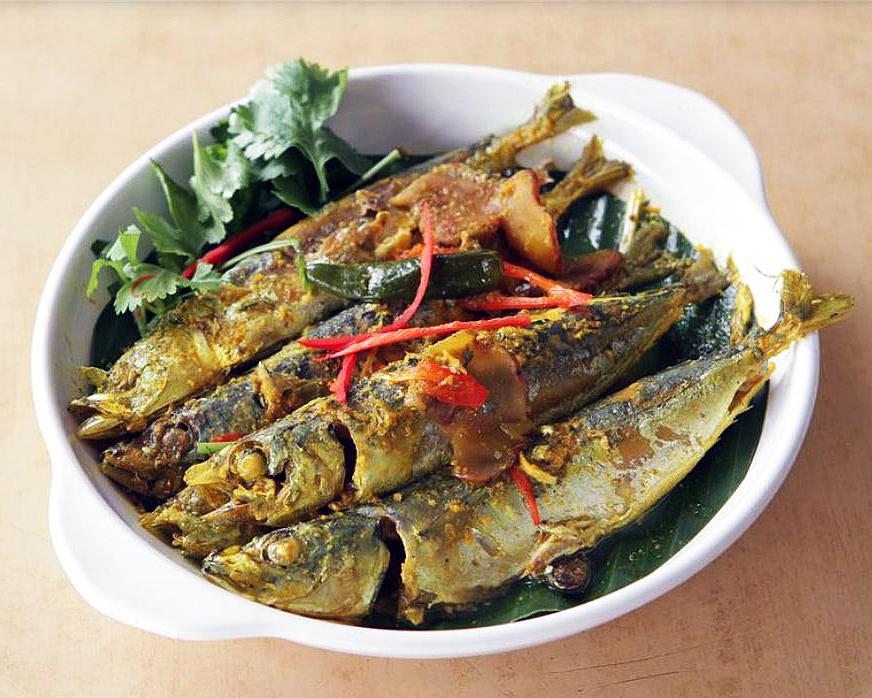
Loved by the Kadazandusun tribe, Pinasakan is a dish that tells a tale of ingenious food preservation. Imagine this: they adored fish, but their highland homes were far from the sea. So, they’d swap forest goodies, veggies, and tobacco for fish from coastal towns. But the journey took days, and fridges were non-existent. So, they got creative. They used sour fruits like takob akob, wild turmeric, and salt to keep the fish fresh.
Basung fish, known for staying moist even when cooked, was the star. They’d simmer it with these tangy treasures, throw in lemongrass, ginger, and bird’s eye chillies for extra oomph, and let it bubble away on low heat till it reduced by half. The result? A preserved dish that could last for days without reheating. Pinasakan is a taste of Sabah’s past, enjoyed best with white rice or ambuyat, and a kick of sambal. Read more here…
3. Tenom Chun Gen
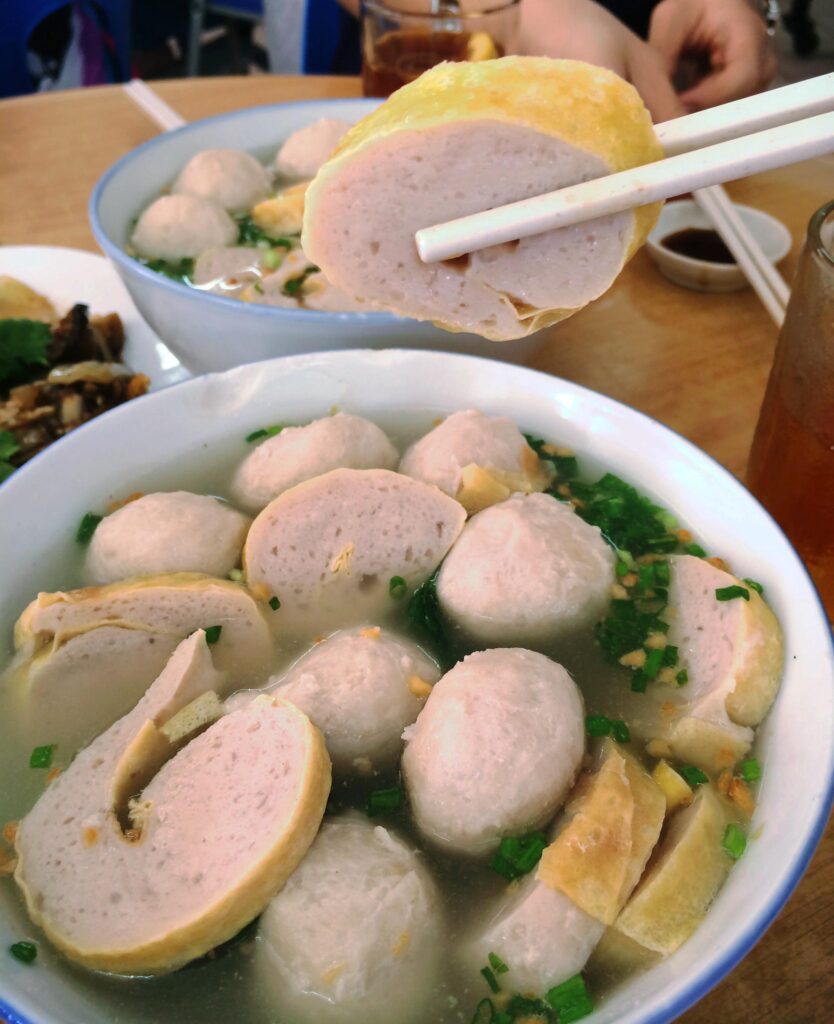
Chun Gen, a unique Hakka delight from Tenom, Sabah, might sound like your usual spring roll, but it’s a delicious twist. In Hakka, “chun” means “egg,” and “gen” means “roll.” So, picture this: it’s not a crispy spring roll; it’s a meaty wonder wrapped in a delicate egg crepe. Traditionally, it’s made with pork shoulder meat, minced to perfection, mixed with goodness like corn starch, salt, and white pepper. Sometimes, they jazz it up with fish or prawn paste, black fungus, and more.
This meaty goodness is spread over a thin egg crepe and rolled into a tantalizing sausage shape. Steamed to perfection, a slice reveals a captivating yellow spiral. Sabah adores Chun Gen, serving it with noodles, fried treats, and local favourites like Tuaran Mee and Wat Tan Hor. Read more here…
4. Sinalau Bakas

Sinalau Bakas, a beloved dish of Sabah’s Kadazandusun people, is a meaty delight. Sinalau means ‘smoked,’ and Bakas means ‘jungle boar,’ and when you’re near Borneo’s rainforests, these wild boars become a common food source. The boar is smoked over a wood fire, infusing it with a delicious smoky flavour.
When you order, you can pick your perfect cut, which is then weighed and priced accordingly. Grilled to perfection with just a sprinkle of salt, the lean yet tender meat is a treat on its own. Savour it with traditional chili and barbecue sauces. You’ll find Sinalau Bakas at roadside stalls and ‘Tamu’ markets, although their hours can be as unpredictable as a boar hunt. Read more here…
5. Tuaran Mee

Tuaran Mee has a heartwarming origin story. Back in 1952, Madam Si opened a small restaurant in Tuaran to make ends meet, and her special touch was the eggy goodness of her homemade noodles. As the restaurant gained popularity, chefs joined the kitchen, and people began flocking to Tuaran just for a taste of this dish.
The magic lies not only in the unique noodles, with their rich egginess, but also in the cooking process. They’re shallow-fried until wonderfully crunchy, then mixed with local veggies, and finally crowned with slices of roast pork and egg roll. And, of course, a dash of traditional Kadazandusun lihing rice wine adds that extra bit of magic to the flavour. Read more here…
6. Linopot

Linopot Rice is a delightful culinary treasure of Sabah’s Kadazandusun people. Made from a blend of rice and yam, this concoction is wrapped tightly in large leaves from the Tarap tree, although banana or irik/ngirik leaves sometimes make an appearance. The yam imparts a royal purple hue to the rice during cooking, while the leafy wrapping not only seals in flavour and moisture but also adds a unique fragrance. It’s like nature’s own to-go box, originally designed for villagers to take their meal to work in the farms and jungles.
Often served with delightful side dishes like fish salad, pickled wild mango, or pickled ginger, Linopot Rice is a rare find these days but still graces festive gatherings, especially during the Tadau Keamatan (harvest festival) and special Kadazandusun occasions. Read more here…
7. Beaufort Mee

Beaufort Mee, originating from the vibrant town of Beaufort in Sabah, features springy egg noodles, succulent char siu (barbecued pork), tender chicken slices, and crisp greens, all stir-fried to perfection with fragrant garlic, soy sauce, and oyster sauce. What sets it apart is the use of lard instead of regular cooking oil, infusing an irresistible richness and enhancing the overall taste. For an extra punch, don’t forget the spicy chilli sauce.
Beaufort Mee is now a beloved favourite across Sabah, gracing coffee shops and hawker centers, and it pairs wonderfully with a refreshing glass of kit chai ping (iced calamansi drink). Read more here…
8. Ambuyat
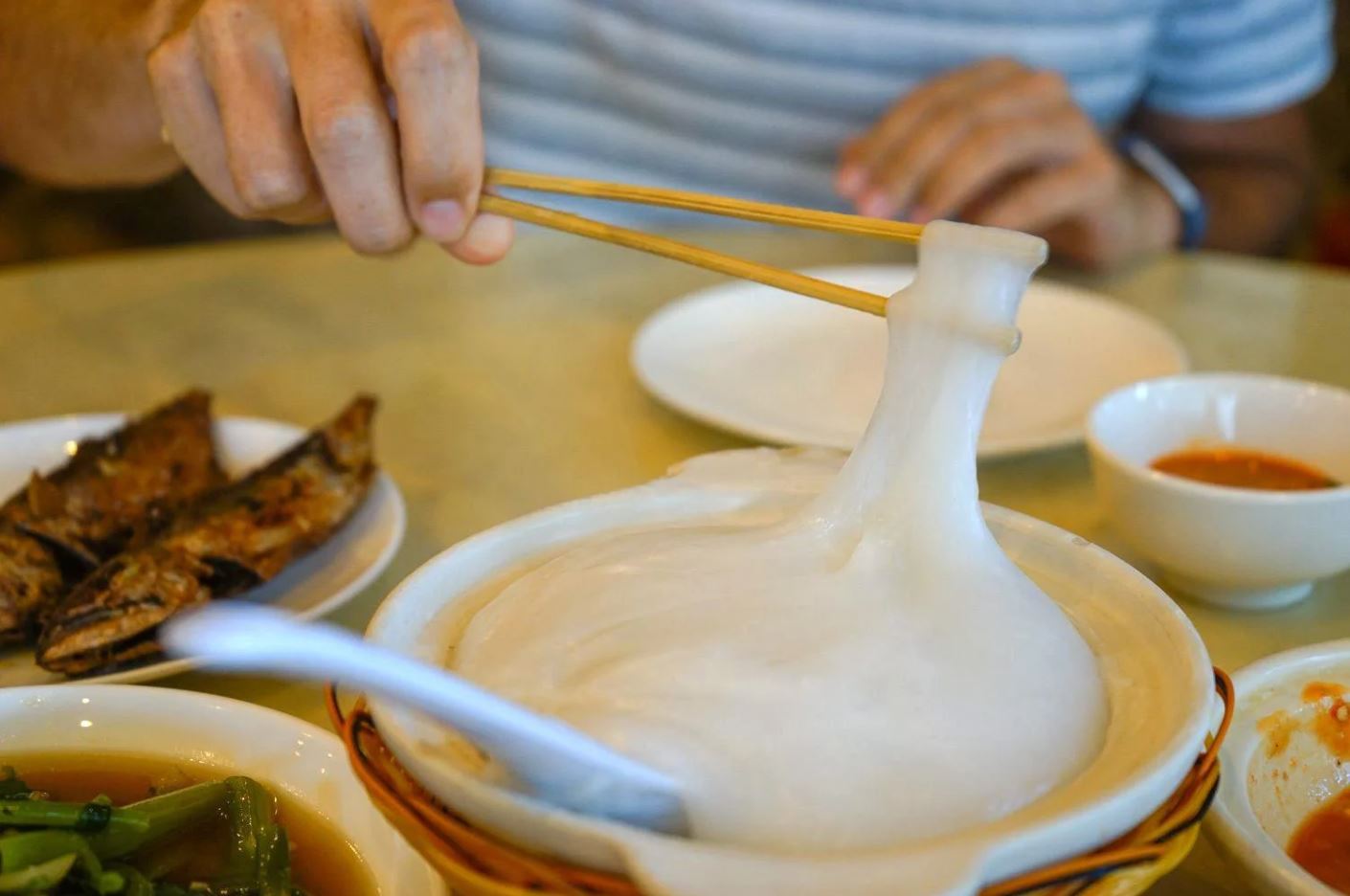
Ambuyat is a traditional Bornean dish made from the starch of the sago palm, especially cherished by the Bisaya tribe in Sabah. Ambuyat is a unique experience because it is sticky, translucent, and eaten warm using a bamboo fork called candas. While its own taste is mild, it’s typically enjoyed with flavourful side dishes like grilled prawns, fish, and tropical sauces.
Once mainly a staple in areas with limited rice, Ambuyat now appears at special events and ethnic restaurants. Over time, this humble dish has crossed borders and cultures, becoming a symbol of unity, tradition, and Borneo’s rich culinary heritage. Read more here…
9. Kitchai Ping

Kitchai Ping is Sabah’s beloved version of iced limeade, made with locally grown calamansi limes and a touch of asam boi (dried sour plum). The name comes from Hakka, where “kitchai” refers to the lime, and “ping” simply means it’s served with ice. Light, tangy, and just the right mix of sweet and salty, this drink is a refreshing pick-me-up on a hot day.
Often found in kopitiams all over Sabah, Kitchai Ping is enjoyed by people of all backgrounds and even has a honey version for those who prefer a smoother taste. Similar lime drinks exist across Malaysia, but Sabah’s take stands out for its bold, thirst-quenching flavour and its deep roots in local culture. Read more here…
10. UFO Tart

UFO Tarts are a beloved Sabahan dessert with a quirky name and an even quirkier backstory. First created by accident in Sandakan in the 1950s by Hainanese baker Fu Ah On, these flying saucer–shaped treats feature a soft, buttery sponge cake base topped with a swirl of sweet custard and fluffy meringue.
Locals fondly refer to them as Ngau Si Dui or “Cow Dung Tarts”, a cheeky nickname inspired by their funny appearance, and a perfect reflection of Sabah’s playful food culture. Although the original recipe was lost over time, different versions have popped up across Sandakan and even in Kota Kinabalu, keeping the tradition alive. Best enjoyed with a hot cup of coffee, these light, eggy, and fragrant tarts are easy to love and hard to forget. Read more here…
11. Sang Nyuk Mian

Sang Nyuk Mian, which means “raw meat noodles” in Hakka, is a signature dish from Tawau that has become a favourite across Sabah. First introduced in 1979 by two brothers inspired by Teochew pork soup, it began as a rice dish before evolving into the now-iconic noodle version. What sets this dish apart is how the thinly sliced pork is blanched fresh in hot, flavourful pork bone broth just before serving, giving it an incredibly tender texture and clean taste. The soup is often packed with offal, greens, and your choice of noodles, with some kopitiams offering dry versions tossed in soy sauce.
Though it may look similar to pork noodle soups found in West Malaysia, the Sabah version carries a distinct twist, thanks to the use of preserved cabbage and unique meat preparation techniques. Rich, comforting, and deeply rooted in local tradition, Sang Nyuk Mian is a must-try for anyone looking to experience the heart and soul of Sabahan comfort food. Read more here…
As we wrap up this tasty tour of Sabah, one thing’s for sure: this place knows how to feed both the belly and the heart. From slurping down a hot bowl of Ngiu Chap or Sang Nyuk Mian, to digging into Pinasakan, Tuaran Mee, or Beaufort Mee, every dish comes with its own story, its own flavour, and a little piece of local pride.
There’s the smoky goodness of Sinalau Bakas, the rustic comfort of Linopot, and the hands-on fun of dipping into Ambuyat with family and friends. And let’s not forget the little joys like cooling off with a glass of Kitchai Ping on a hot day, or biting into a soft, sweet UFO Tart that somehow feels like home.
Of course, this list is just the beginning. Sabah’s food scene is wide, colourful, and full of surprises. There are so many more unique dishes waiting to be discovered, tasted, and loved.
Sabah’s food is all about people, places, and memories. So until you find yourself here again, keep trying new things, share good food with good company, and stay curious. And if you know someone planning a trip to Sabah (or who just loves food), feel free to share this with them. Who knows? It might just inspire their next bite.