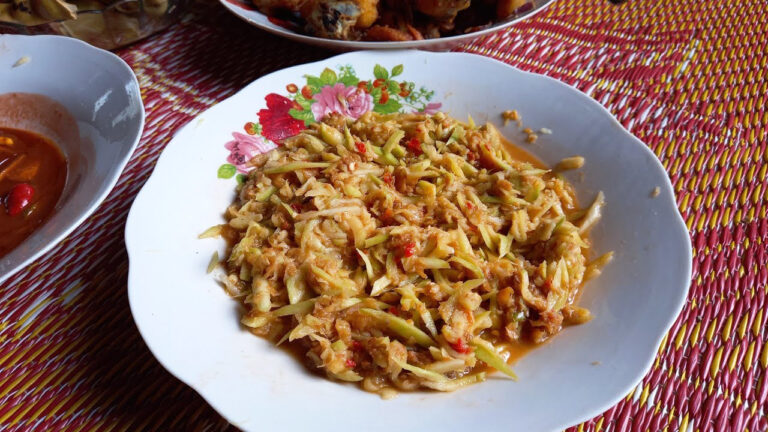
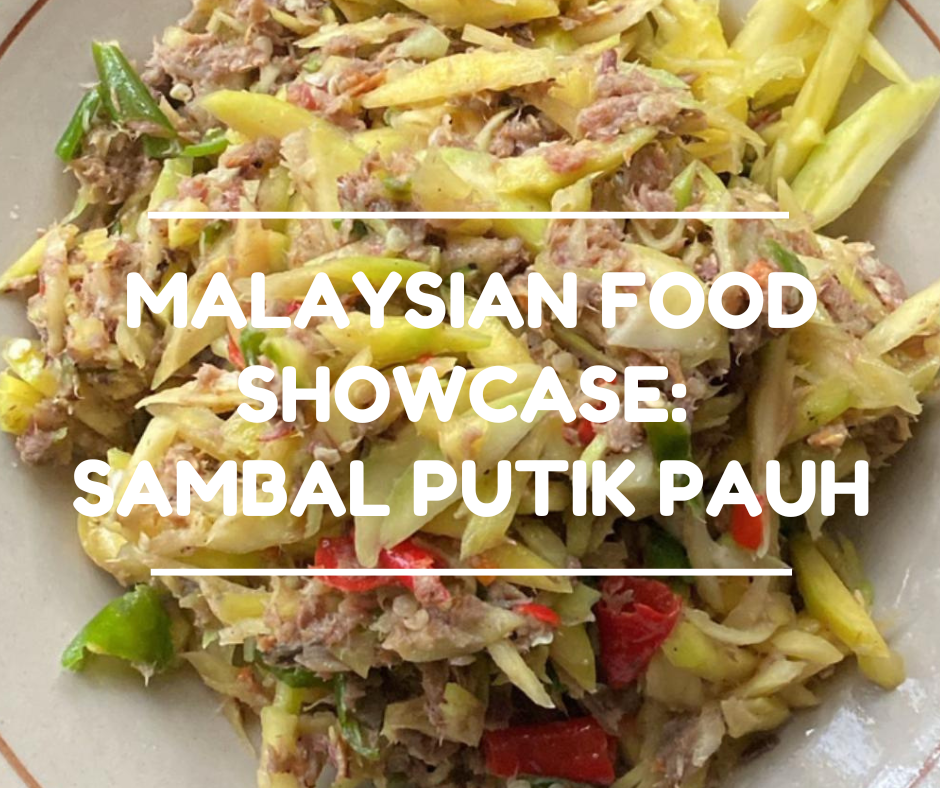
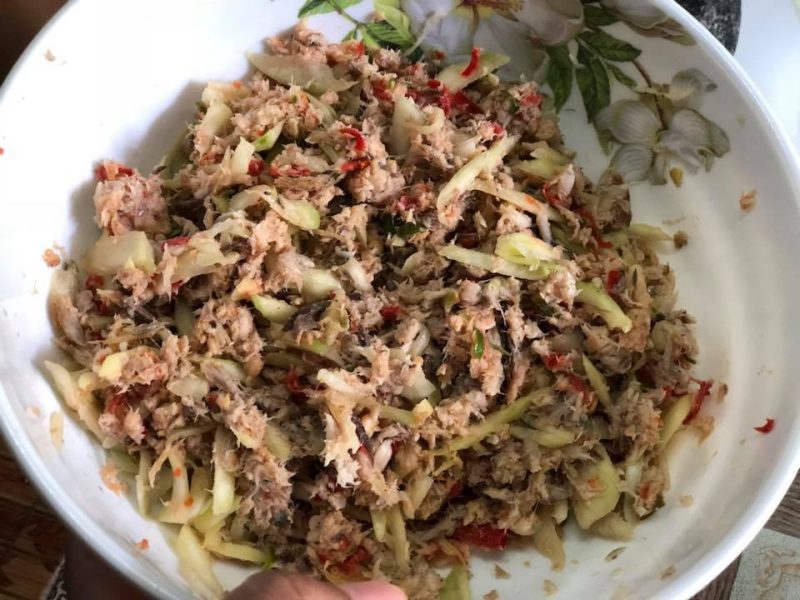
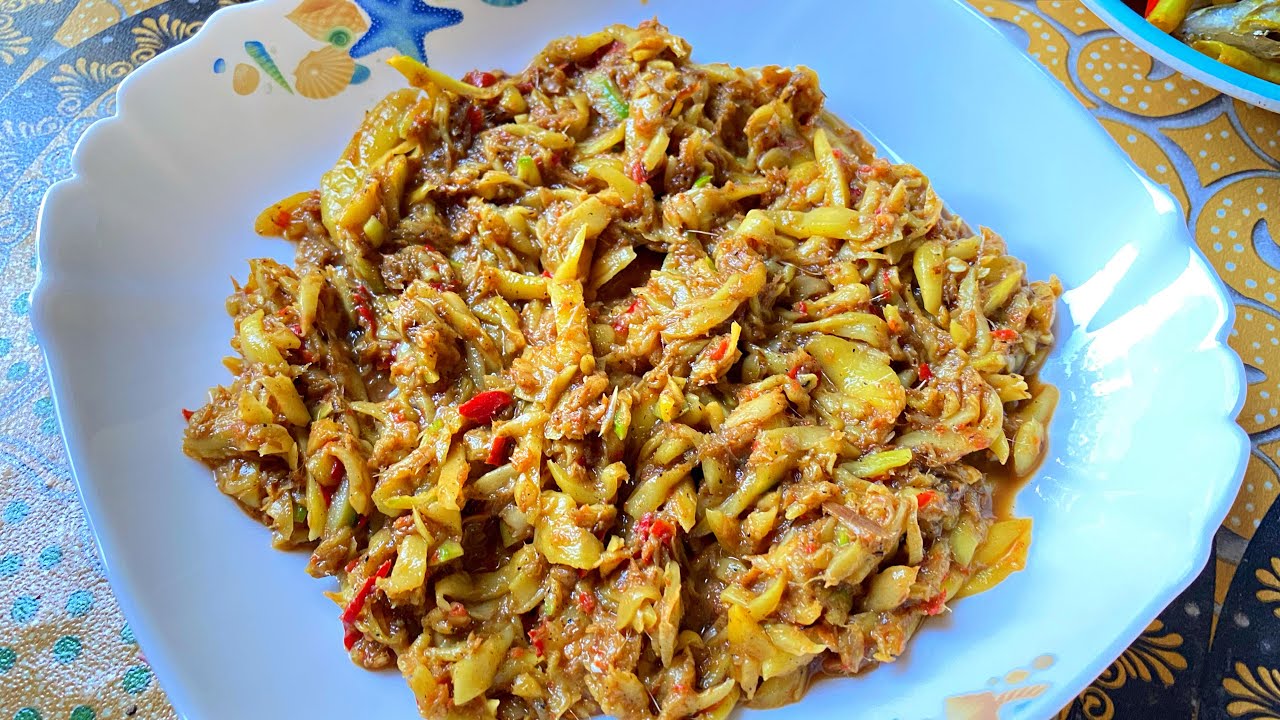
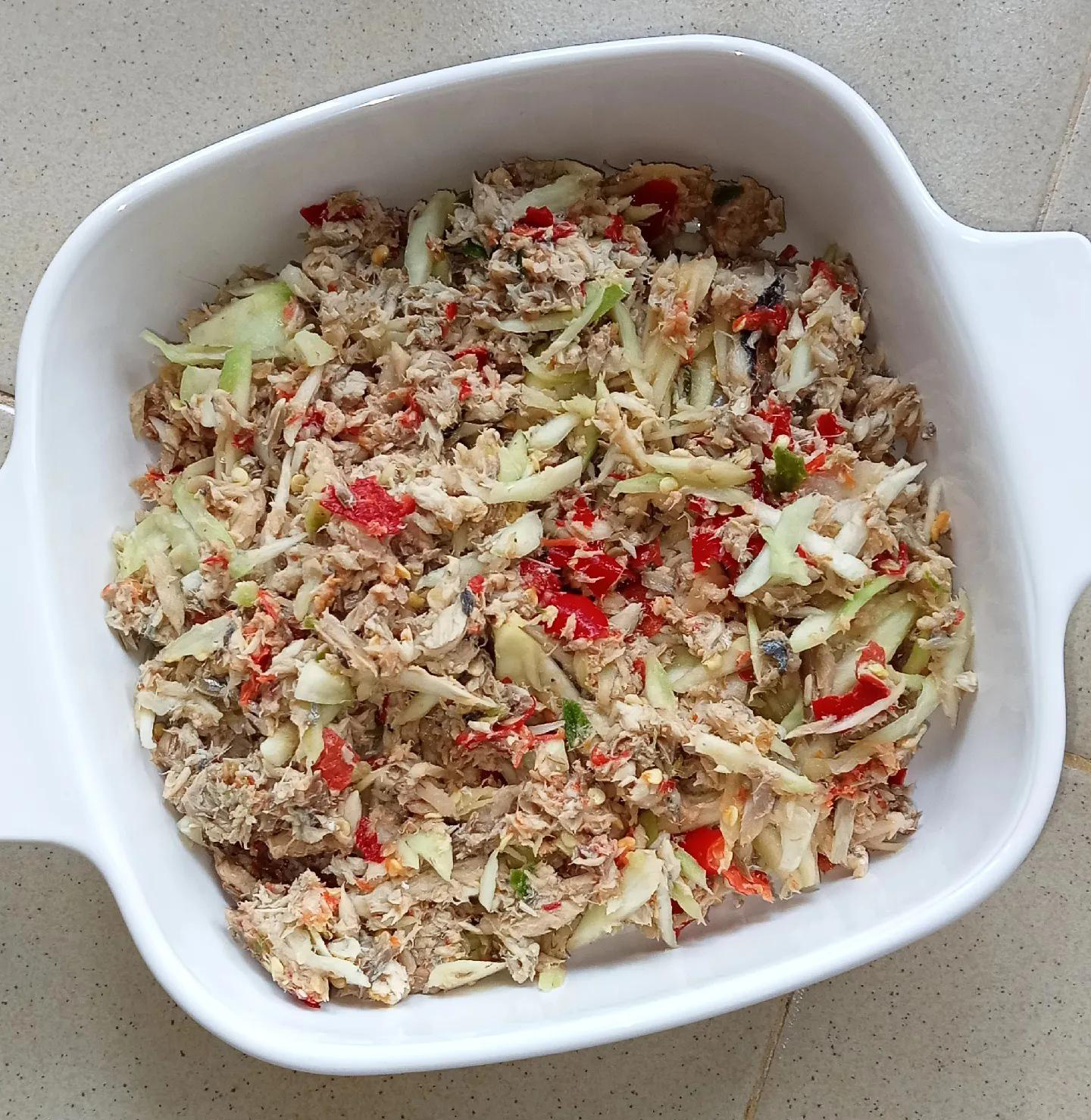
Sambal Putik Pauh is a traditional dish from Kelantan, and even its name already tells you what to expect. In the local dialect, putik pauh means young or unripe mango. This sambal is built around that ingredient, finely chopped and mixed with fish and chillies, then eaten with hot rice. It is often served as a lauk pelengkap, meaning a supporting side dish, alongside fried fish, fresh herbs (ulam-ulaman), and fermented fish sauce known as budu.
The preparation is simple, but very intentional. The young mango is peeled and chopped finely, giving off a sharp, fresh sour aroma. Fish, usually ikan selayang (scad) or ikan kembung (Indian mackerel), is either grilled slowly over fire or fried until cooked. The flesh is then separated carefully from the bones. Chillies, typically bird’s eye chillies (cili padi), are pounded using a traditional mortar and pestle (lesung batu). Some cooks pound the fish together with the chillies, while others mix them separately. Everything is then combined and lightly seasoned with salt, and sometimes a bit of sugar to balance the flavours. The sambal is not cooked after mixing, it is eaten fresh, resulting in a bold combination of sour, spicy, and savoury richness.
What makes Sambal Putik Pauh more than just food is how closely it is tied to its environment. Kelantan’s tropical climate, with high humidity and steady warmth, allows mango trees to grow easily, especially in village areas and river plains with fertile soil. Because of this, the dish reflects a way of life where people cook based on what is naturally available. It shows a direct relationship between people and nature, where local ingredients shape everyday meals.
The name itself, putik pauh, is also culturally significant. It is not standard Malay, but part of Kelantanese dialect, showing how language and food are deeply connected. This is a dish that is passed down through generations, from grandmother to mother to child. It is less about who invented it, and more about how it continues to exist within families.
There is also a strong emotional layer to this sambal. It is often described as a dish tied to the love of a mother. Not in a grand or elaborate way, but in quiet, everyday cooking. It brings back memories of traditional kampung kitchens, where meals are prepared slowly and shared together. Each bite carries that sense of care, something simple but deeply personal.
Today, Sambal Putik Pauh is still commonly eaten in Kelantan homes. It is not a festive dish, but part of daily life. At the same time, it is increasingly recognised as part of Kelantan’s culinary identity, sometimes introduced to visitors through cultural and food tourism experiences. Its appeal lies not just in taste, but in the story it carries, one of land, memory, and family.
If you ever try it, the best way is the simplest. Hot rice, a piece of fried fish, maybe some ulam on the side. The first taste is bright and sour from the mango, followed by the heat of the chillies, and then the savoury depth of the fish. It is not refined or overly polished. It is honest, textured, and full of character.