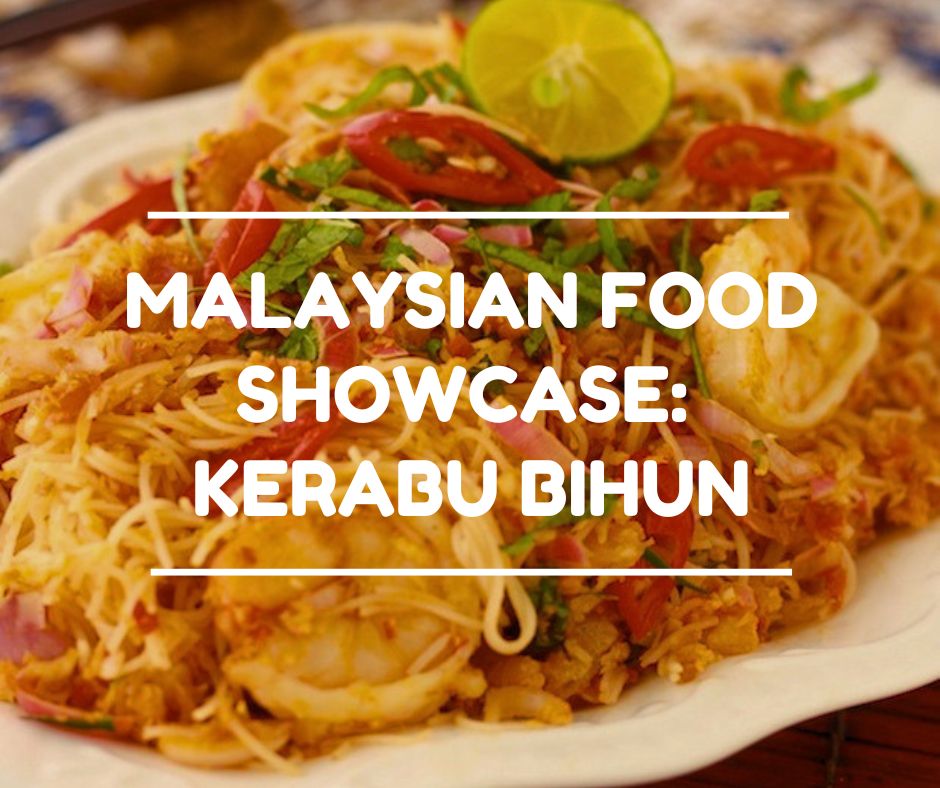
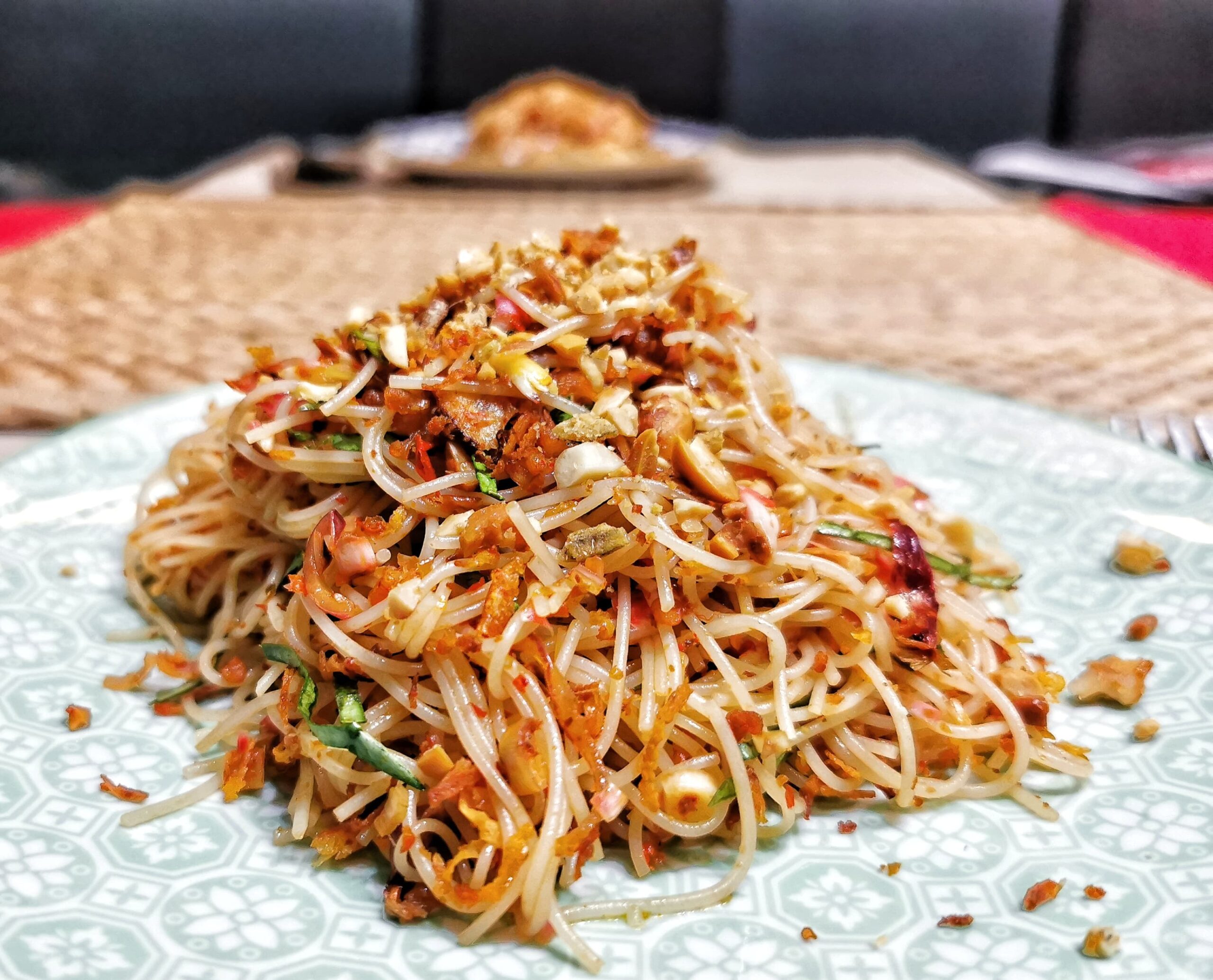
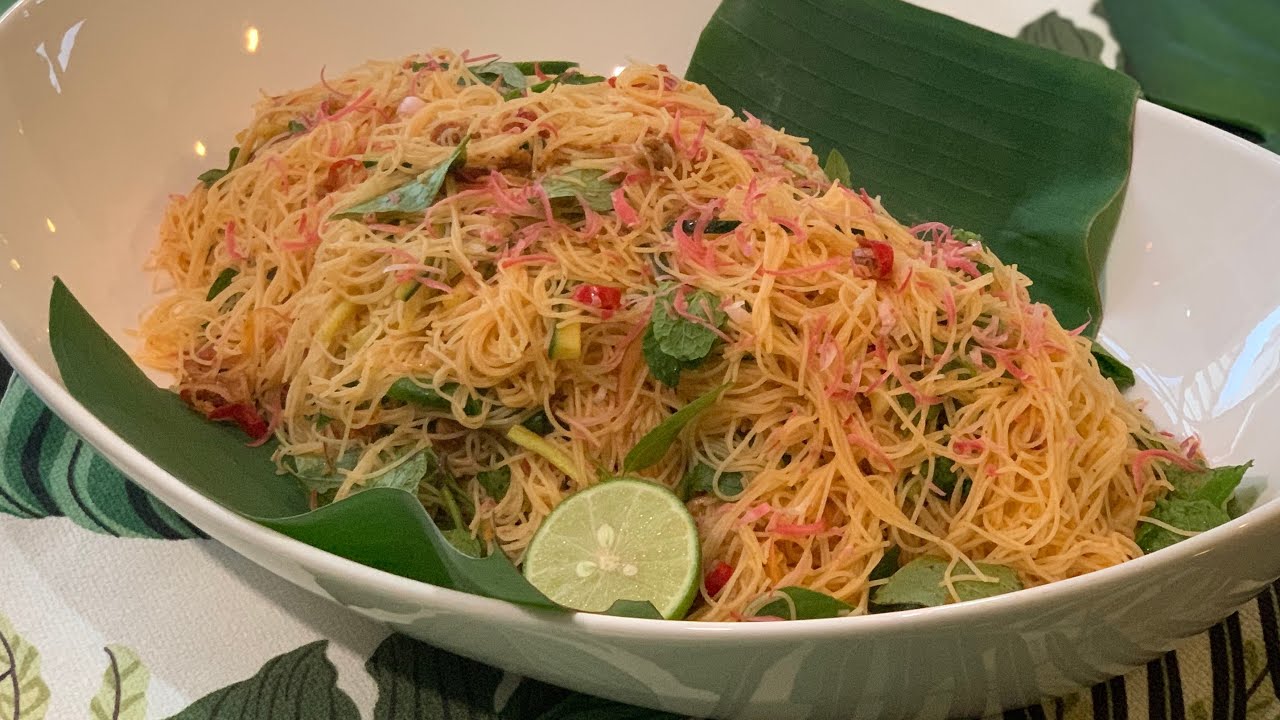
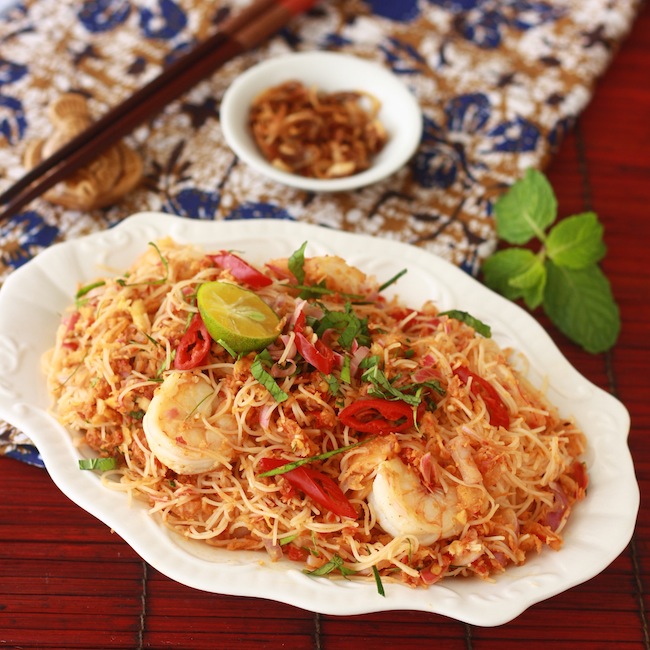
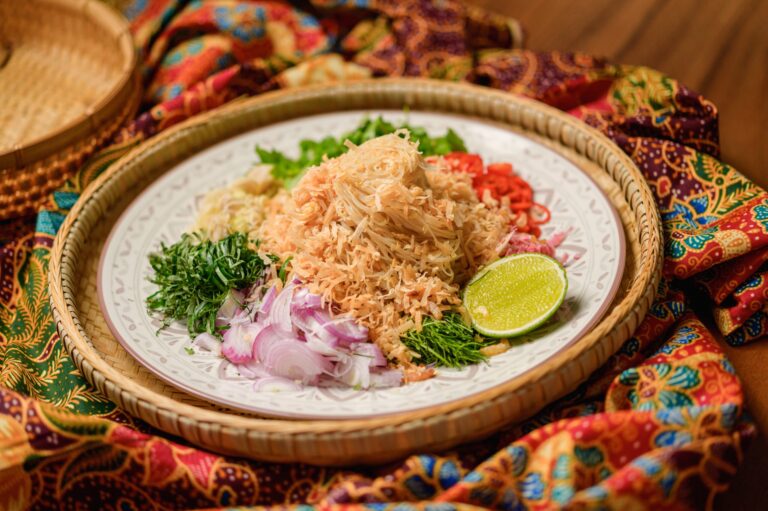
Kerabu Bihun/Beehoon (卡拉布米粉/娘惹酸辣米粉) is one of those dishes that quietly represents the spirit of Malaysian food culture. Lightly tossed rice vermicelli meets a riot of fresh herbs, sambal belacan, lime juice, and toasted dried shrimp, creating something that feels both refreshing and intensely aromatic at the same time. In Penang especially, the dish carries strong Nyonya roots, though traces of Thai influence can also be tasted in its sharper sourness and herb-heavy character.
Unlike heavily fried bee hoon dishes or rich curry noodles, Kerabu Bihun depends on freshness and balance. The bihun is first blanched until springy and soft without becoming mushy. Then comes the labour-intensive part. Bunga kantan is sliced into ultra-fine slivers. Kaffir lime leaves are rolled tightly before being chiffonaded into thin ribbons. Lemongrass, shallots, bird’s eye chilies, and sometimes fresh mint are all prepared carefully so every mouthful carries a little bit of everything.
The dressing itself is punchy but elegant. Sambal belacan provides heat and fermented depth, while limau kasturi or fresh lime juice cuts through with bright acidity. Toasted dried shrimp adds savoury richness, and some families finish the dish with kerisik for a warm, nutty aroma. A few versions include prawns, bean sprouts, tofu, or carrot strips for extra texture. Oh man, when the fragrance of torch ginger flower rises from the bowl, you already know the meal is going to hit differently.
The word “kerabu” comes from the Malay tradition of herb-rich salads mixed with spicy and sour dressings. “Bihun” meanwhile traces back to the Hokkien phrase bí-hún, meaning rice flour noodles. The dish itself reflects exactly what makes Malaysian food culture so layered. Malay herb traditions, Chinese noodles, Peranakan adaptation, and northern Thai influence all end up sharing the same plate.
Back in the day, dishes like this were often made in homes rather than restaurants because preparing all the herbs took time and patience. Every ingredient had to be sliced properly, not roughly chopped. Among older Peranakan families, the use of bunga kantan and lemongrass was also tied to traditional beliefs about digestion and circulation. Food was not just flavour. It was nourishment in a broader sense.
Today, Kerabu Bihun can still be found in Penang Nyonya eateries, kopitiams, Ramadhan bazaars, and family gatherings. Some modern vendors experiment with Thai tom yam paste instead of sambal belacan, while others create striking blue versions using bunga telang. The dish also works surprisingly well cold, so leftovers are often eaten straight from the fridge the next day.
Best eaten slightly chilled with extra lime squeezed over the top. And if the bunga kantan aroma is strong enough to hit your nose before the plate reaches the table, that is usually a very good sign.