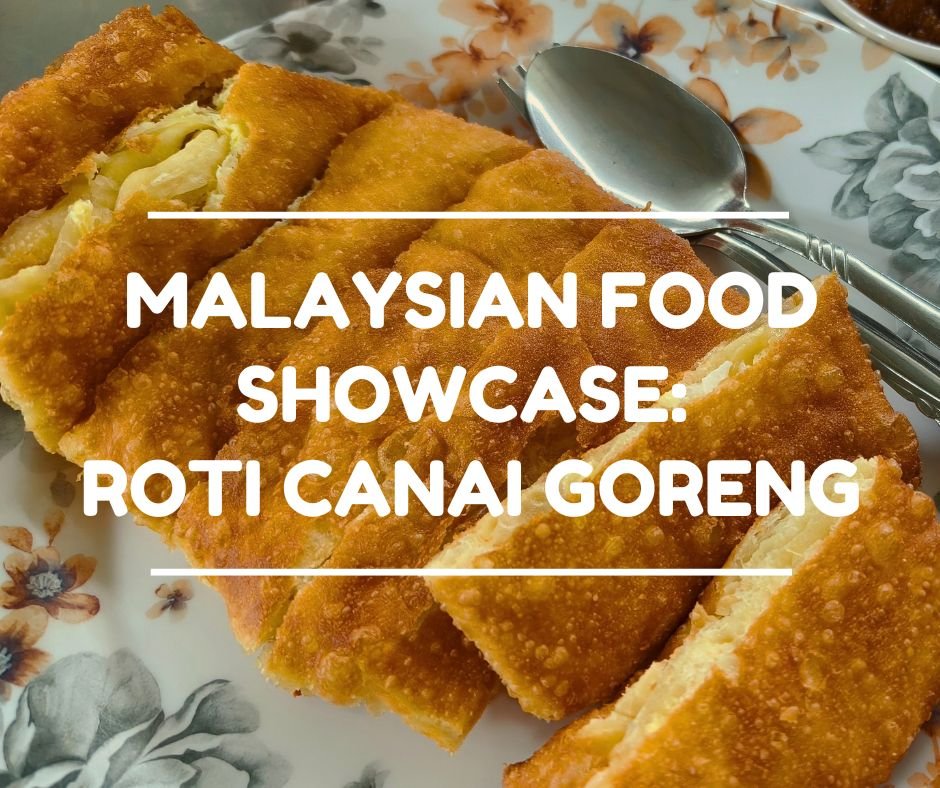
Roti Canai Goreng: Kapit's Iconic Deep-fried Flatbread
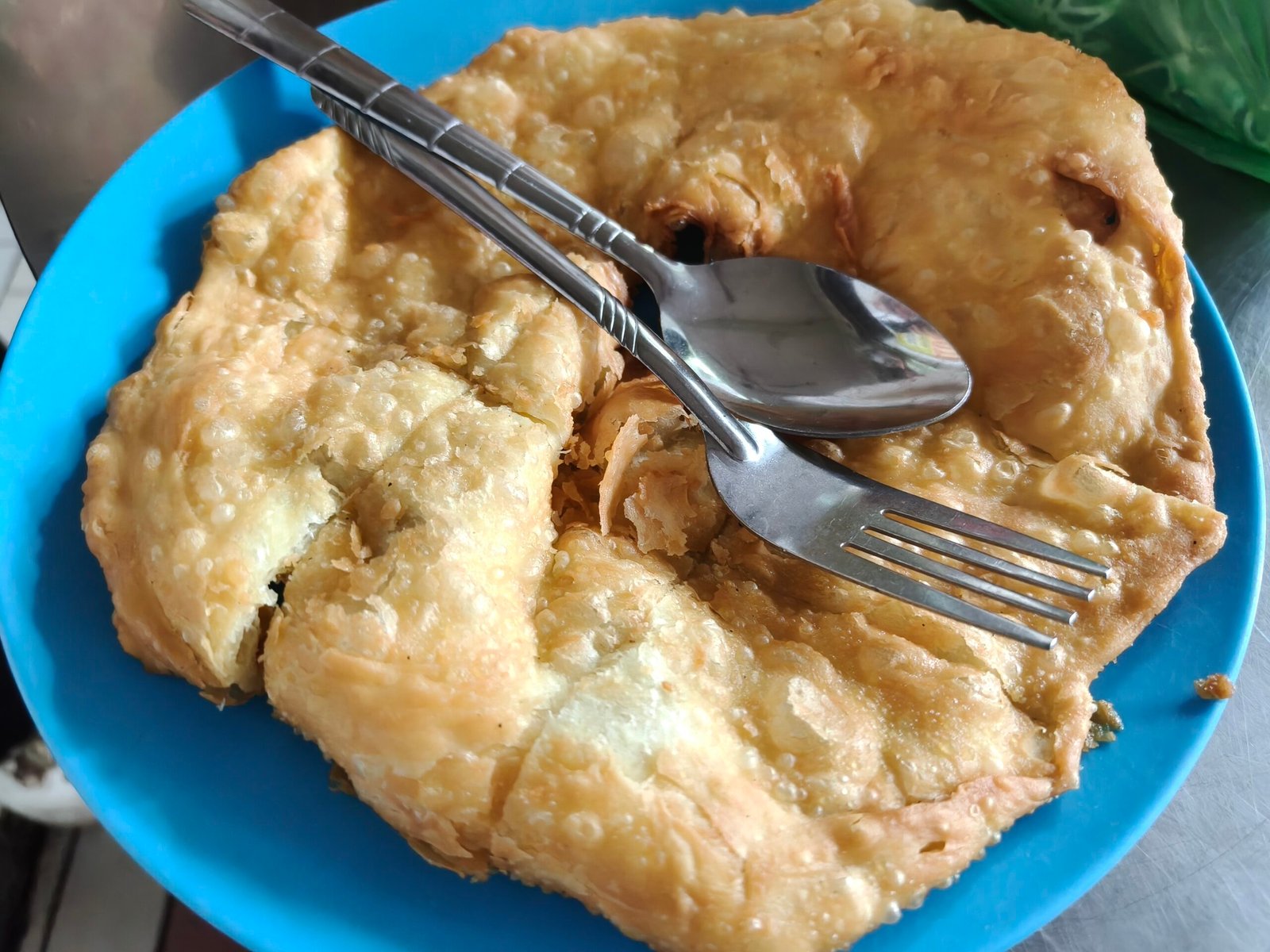
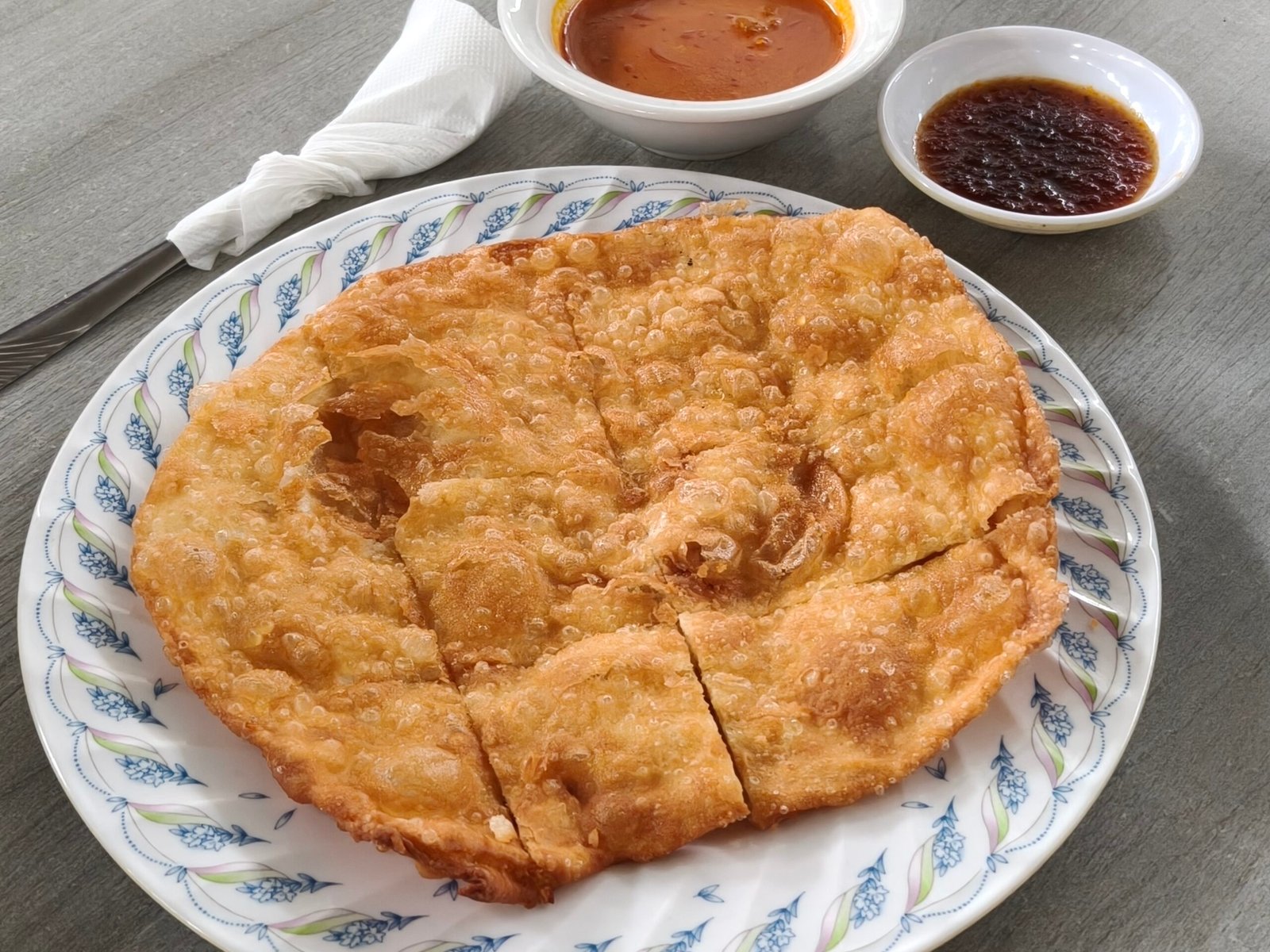
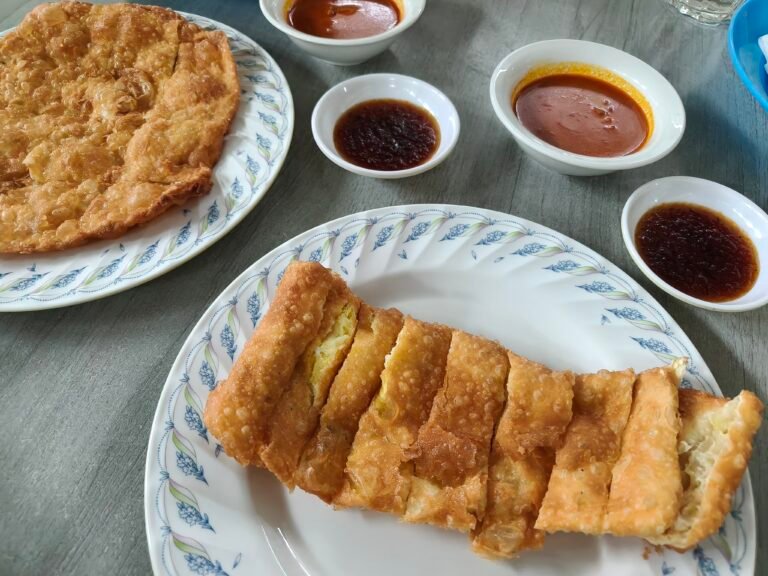
Roti Canai Goreng is not your usual roti canai. Across Malaysia, roti canai is typically stretched, folded and cooked on a flat griddle, but in Kapit, Sarawak, the dough takes a very different route. It is dropped into hot oil and deep-fried until the outside turns golden, crisp and flaky, while the inside stays soft, moist and tender.
This unusual preparation has become one of Kapit’s signature foods. In fact, Roti Canai Goreng is so closely associated with the town that locals often describe it as something you simply have to try when visiting Kapit. Head to Medan Selera Gelanggang Kenyalang and you will find several stalls now serving their own versions of this distinctive fried flatbread. What began as a local speciality has gradually become part of Kapit’s everyday food culture.
The ingredients are surprisingly simple. The dough is made with flour, milk, butter, egg, salt and boiled water, while hot oil is used for deep-frying. But as anyone familiar with roti canai knows, the real magic is in the handling of the dough.
Traditionally, the dough was mixed and kneaded by hand before being left to rest for around three hours. After resting, it is divided into smaller portions and shaped before going into the oil. That resting period matters because the dough needs time to develop the texture that gives the finished roti its distinctive combination of crispness and softness.
Then comes the deep-frying. The oil needs to be properly hot. Too cool, and the dough absorbs excessive oil and becomes heavy and soggy. Get the temperature right, however, and the outside quickly develops a crisp, flaky shell while the inside remains soft and almost pillowy. It is this contrast that makes Roti Canai Goreng so different from the familiar griddle-cooked version.
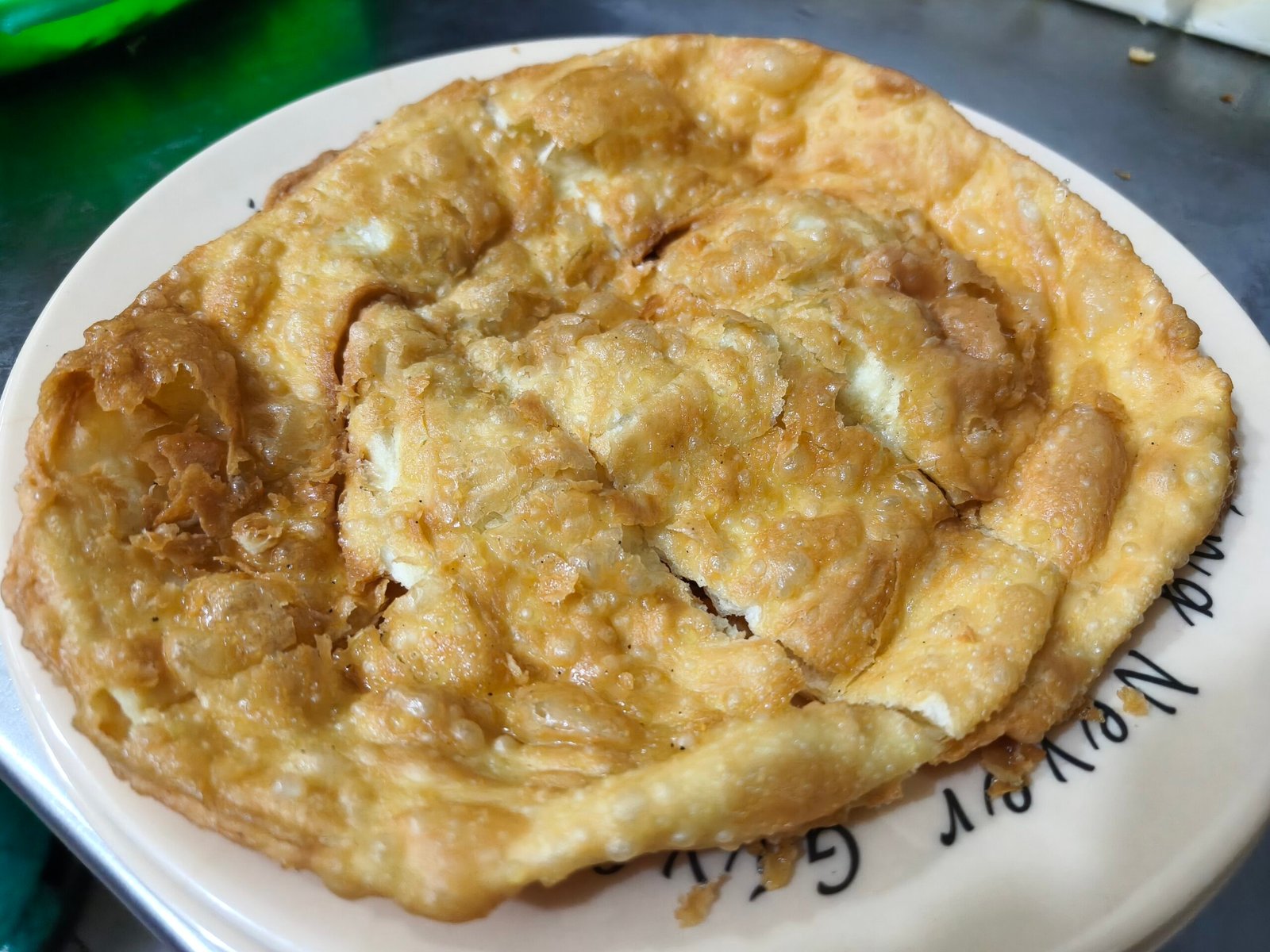
There are two main versions commonly found at the food court: Roti Canai Goreng Kosong and Roti Canai Goreng Telur.
The kosong is the straightforward version, and perhaps the best way to appreciate the technique itself. Usually round in shape, it emerges from the oil golden and crisp before being cut into pieces for eating. Tear one open while it is still hot and you get that satisfying contrast between the crunchy outer layers and softer centre.
The telur version takes things a step further. Here, the egg is first lightly fried with a little salt, almost like a small omelette. It is then folded into the dough before the whole thing is deep-fried. This is quite different from the usual roti canai telur preparation found at mamak stalls, where the egg is generally cooked directly with the dough on the griddle. In Kapit, the egg becomes part of the deep-fried package, adding another layer of texture inside.
And then there is the sambal and curry. Roti Canai Goreng is commonly eaten in Kapit with chicken curry or a spicy, tangy-sweet sambal. The combination is wonderfully straightforward. The crisp roti gives you a rich, buttery base, the curry adds warmth and savouriness, while the sambal cuts through everything with its spicy and slightly sweet tang. It is the sort of breakfast where you start with one piece and somehow find yourself reaching for another.
The origins of the frying method are a little less straightforward. Nurbaizura Abdullah is often associated and credited with the early development of the Kapit style, having inherited and continued the tradition of making it for the local market. She said that the technique developed partly because of limitations in obtaining suitable cooking equipment. Rather than cooking the dough on a conventional flat griddle, she adapted by frying it in hot oil. Whether it was an intentional innovation or a practical solution that simply happened to work, the method stuck.
Today, the story is bigger than just one seller. The popularity of the dish has led to multiple stalls at Gelanggang Kenyalang offering Roti Canai Goreng, turning what was once a distinctive preparation into a recognisable part of Kapit’s food scene.
There is a certain charm in that. The dish does not need an elaborate origin story to explain why it belongs to Kapit. Its identity is built through repetition: morning after morning, dough being prepared, oil heating in the wok, roti coming out crisp and golden, and customers sitting down with curry and sambal. Over time, the food becomes part of the place itself.
The popularity of Roti Canai Goreng has also extended beyond Kapit. It was introduced to visitors in Kuching during Sarawak AgroFest in 2018, giving people outside the town a chance to taste the speciality. Yet its strongest identity remains firmly rooted in Kapit, where several stalls now serve it and where locals continue to enjoy it as a familiar breakfast and light meal.
There have even been attempts to develop other fillings, but deep-frying creates different challenges from cooking roti canai on a flat griddle. Ingredients such as cheese or peanut butter do not behave quite the same way inside a deep-fried dough. For now, the plain and egg versions remain the established choices.
So if you find yourself in Kapit in the morning, make your way to Gelanggang Kenyalang and look for the roti coming straight out of the hot oil. Eat it while it is still warm, tear off a crisp piece and dip it into the curry or that sweet-spicy sambal.
It might look like a simple roti canai, but that first crunch tells you otherwise. This is Kapit’s version, shaped by local cooking, local tastes and years of being enjoyed at the same morning food court. And that is probably the best way to understand Roti Canai Goreng Kapit: not simply as a fried version of a familiar Malaysian breakfast, but as a food that has become part of the town’s identity.