
Sam Kan Chong Pork Ball Noodles: The Taste of Long Lost KL
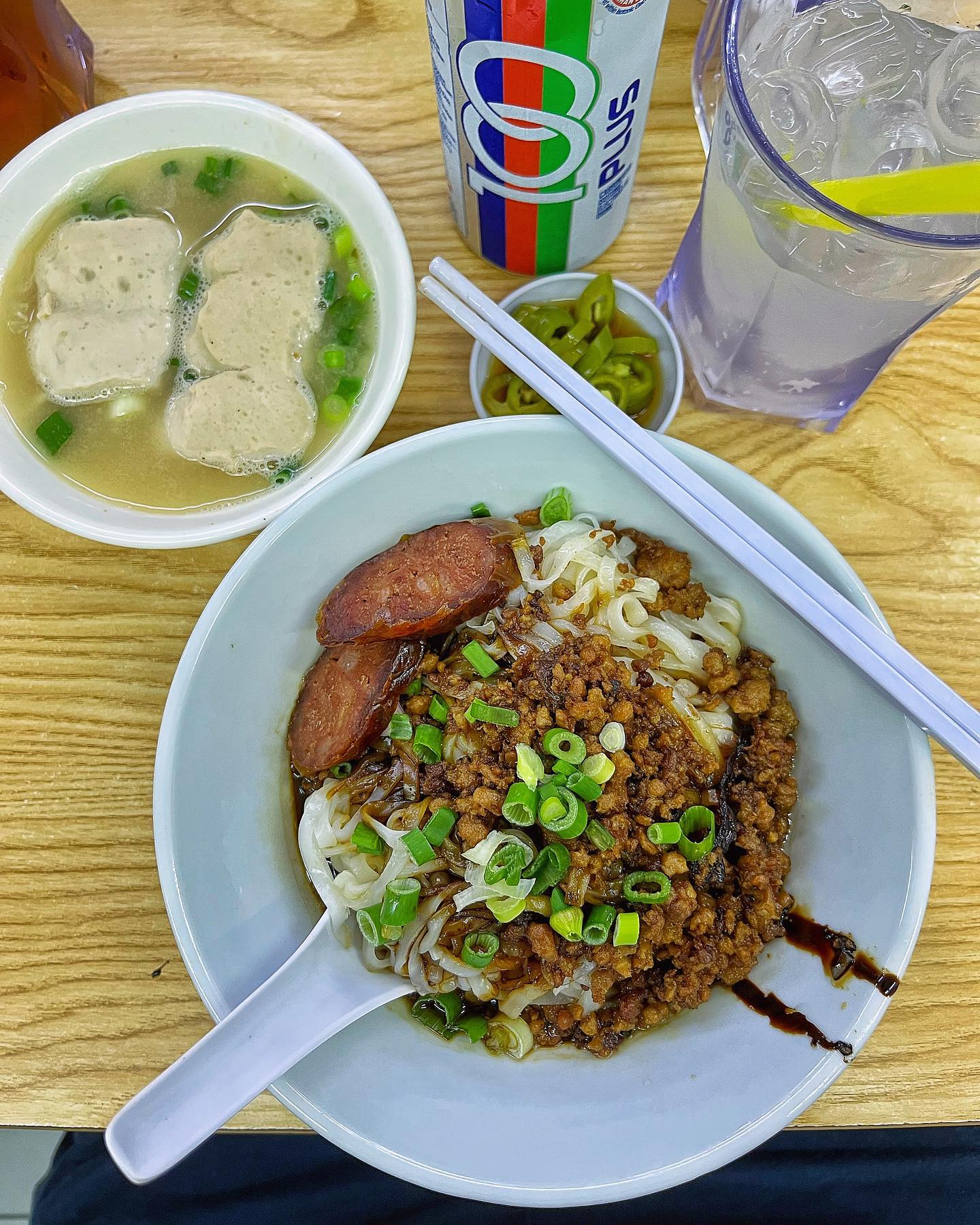
Sam Kan Chong Pork Ball Noodles 三间庄猪肉丸粉 is one of those Klang Valley dishes that many people grow up eating before fully understanding its name. It sounds like a brand, but it is actually a place. Or more accurately, a place that no longer exists. Deep in old Kuala Lumpur, near Jalan Silang and Petaling Street, this humble pork noodle dish once fed students and workers long before shopping malls and fast food chains took over the landscape.
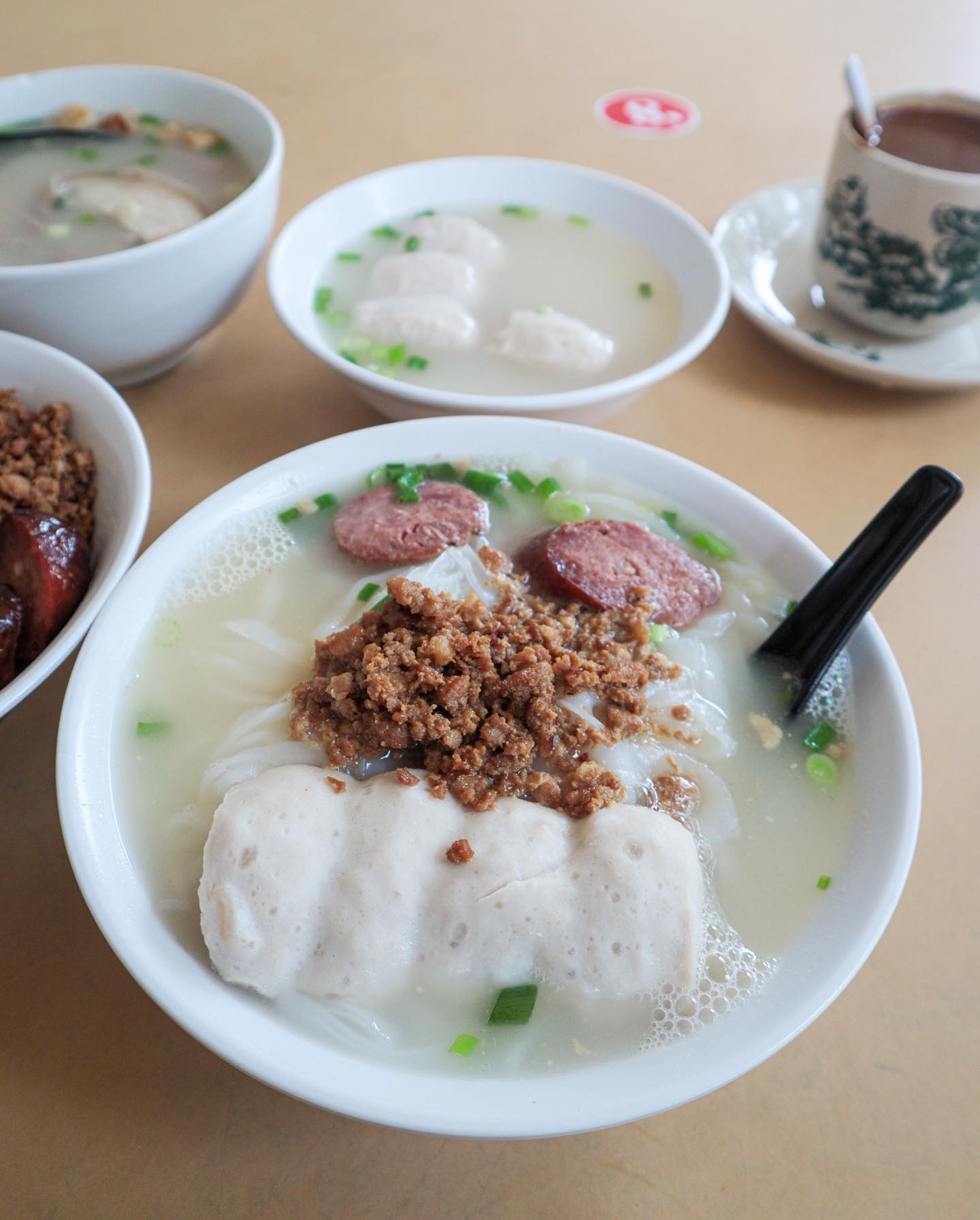
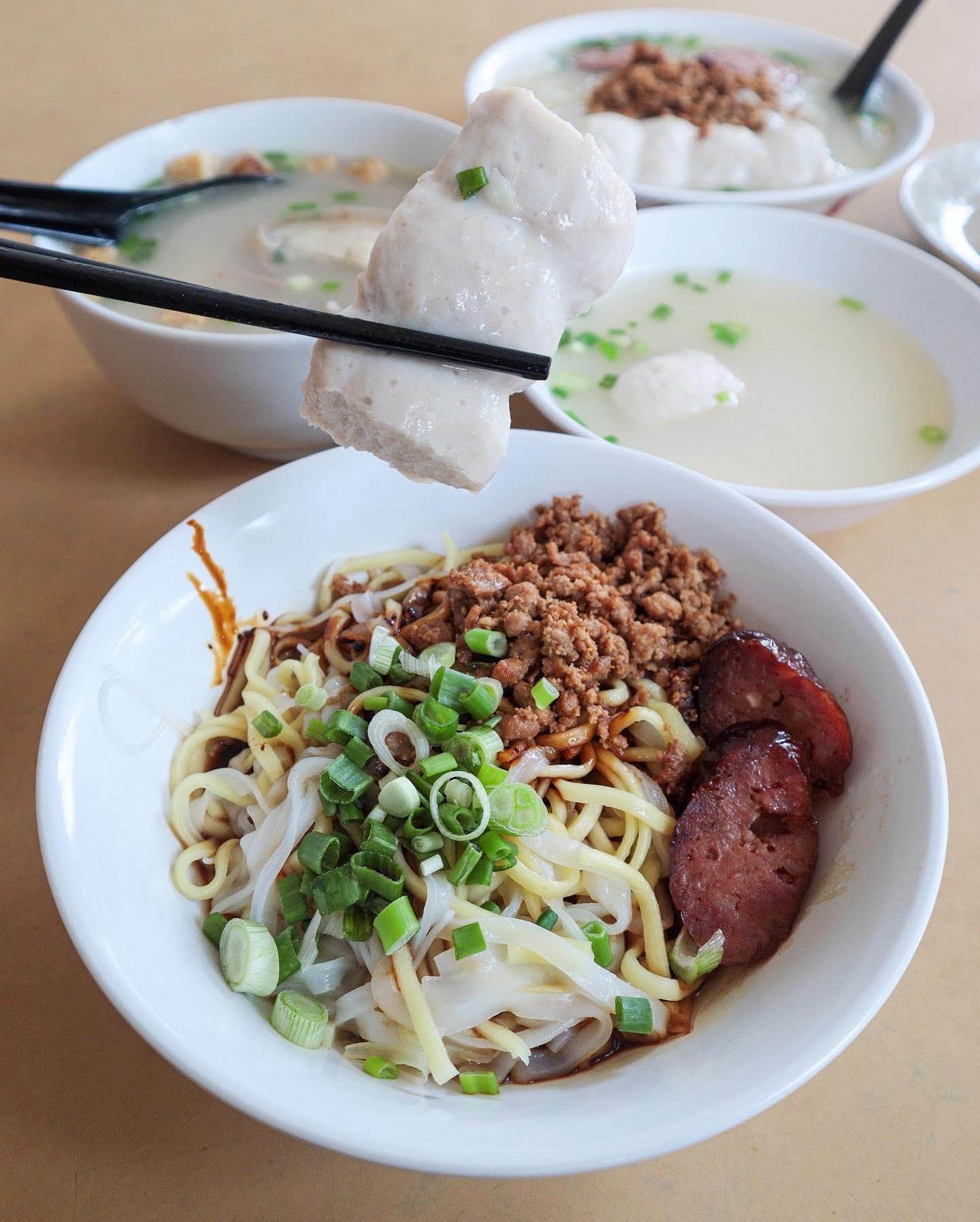
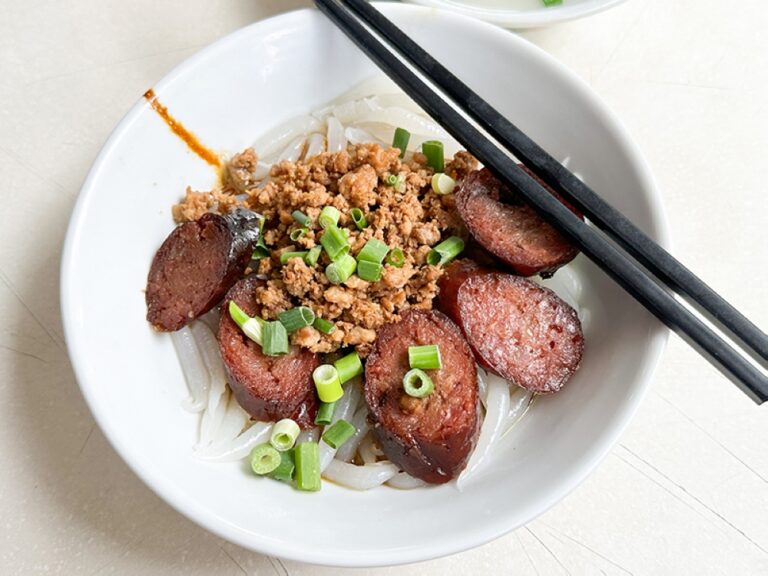
The dish begins with a pork bone broth that is simmered for hours until it turns naturally creamy white. This is not a light soup. It is rich, gently sweet, and layered with pork flavour that lingers. White pepper is added before serving, giving the broth a soft, warming kick that never overwhelms. The noodles are cooked separately, with customers choosing between mee hoon, kway teow, yellow mee, or a mixture. In the dry-tossed version, the noodles are tossed with dark soy sauce, light soy sauce, and sesame oil, resulting in a mild brown hue that tastes savoury without being heavy. Texture-wise, the noodles tend to be moist rather than al dente, making them easy to eat and well suited to the accompanying soup.
Toppings are where Sam Kan Chong reveals its personality. Fried minced pork sits on top, browned just enough to release a subtle toastiness while retaining natural pork sweetness. This element reflects the dish’s connection to Hakka-style pork noodles. Cantonese roast sausage aka siu cheong, sliced thinly, adds a gentle sweetness and a faint alcoholic aroma from its seasoning. For those who enjoy more variety, stalls may also include pork ribs, pork shoulder, lean meat, or offals. Innards, when offered, must be prepared carefully to avoid any gamey taste, and many stalls allow substitutions for diners who prefer not to eat them.
Then there are the pork balls. Sam Kan Chong pork balls break the usual expectation of being round. Instead, they are rectangular, formed tightly together in rows, traditionally shaped in a pan with each piece touching the next. Made with minced pork and flour, they are pale in colour and prized for their springy, crunchy yet moist texture. They are not as hard as regular pork balls, making them especially satisfying. Today, these pork balls are widely sold in wet markets and night markets across the Klang Valley in long slabs, ready to be broken apart for cooking at home.
The name Sam Kan Chong or Sam Gan Zhong literally means “three shop units” in Cantonese. Decades ago, the original stall operated from a corner row of three adjoining shophouses located between Foch Avenue, now Jalan Tun Tan Cheng Lock, and Jalan Silang. This was a back alley behind what would later become Kotaraya. At that time, Jalan Cheng Lock was still known as Foch Avenue, and Kotaraya did not yet exist. Malaysian students would stop by after school before catching buses home from Jalan Silang. It was filling, affordable, and deeply woven into everyday KL life.
Urban redevelopment eventually erased the original shophouses. They were demolished, and the area was transformed, with Kotaraya and later a McDonald’s taking their place. The original stall disappeared, but its method did not. The skills were passed down, copied, and adapted. All current Sam Kan Chong pork ball noodle stalls trace their lineage back to this original outlet. Notably, the first stall only served soup-style noodles. The dry version, as well as curry variations, emerged later as hawkers modified the dish to suit changing tastes.
There is frequent confusion between Sam Kan Chong and Sekinchan. Some noodle stalls mistakenly label the dish as Sekinchan Pork Noodles, assuming Sam Kan Chong is an old name for Sekinchan or confusing the similar-sounding Chinese names 三间庄 and 适耕庄. This is incorrect. Sam Kan Chong refers specifically to the three-shophouse origin near Jalan Silang and has no historical connection to Sekinchan.
Today, Sam Kan Chong pork ball noodles are are more commonly found in the Klang Valley. The dish continues to evolve while holding onto its defining elements. Some stalls still make their pork balls and sausages fresh daily at the shop. Others supply them to fellow hawkers, spreading the style beyond Kuala Lumpur.
If you want to understand why this dish has lasted, start with the soup. Sip it first. Let the pork bones and white pepper speak. Then go for the pork balls, rectangular and springy, unmistakably Sam Kan Chong. It may no longer be eaten in the shadow of three old shophouses, but its place in KL food memory is very much intact.
If you’re abroad and missing this dish; I’ve got a video to show how to make the noodles, with the local ingredients you have access to!
https://youtu.be/SbLMuLDmTQM