Inchi Kabin: The Spiced Soul of Nyonya Fried Chicken
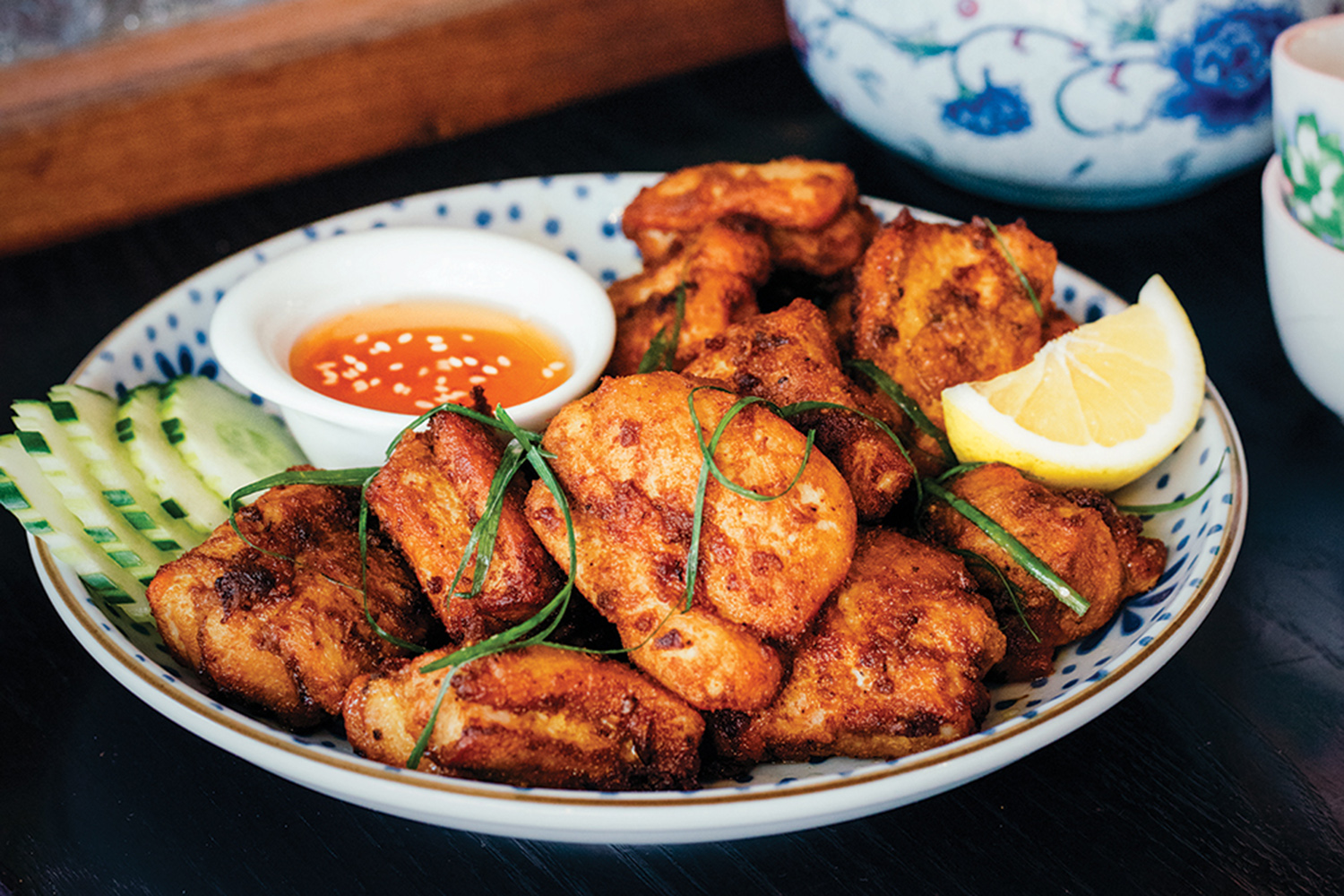
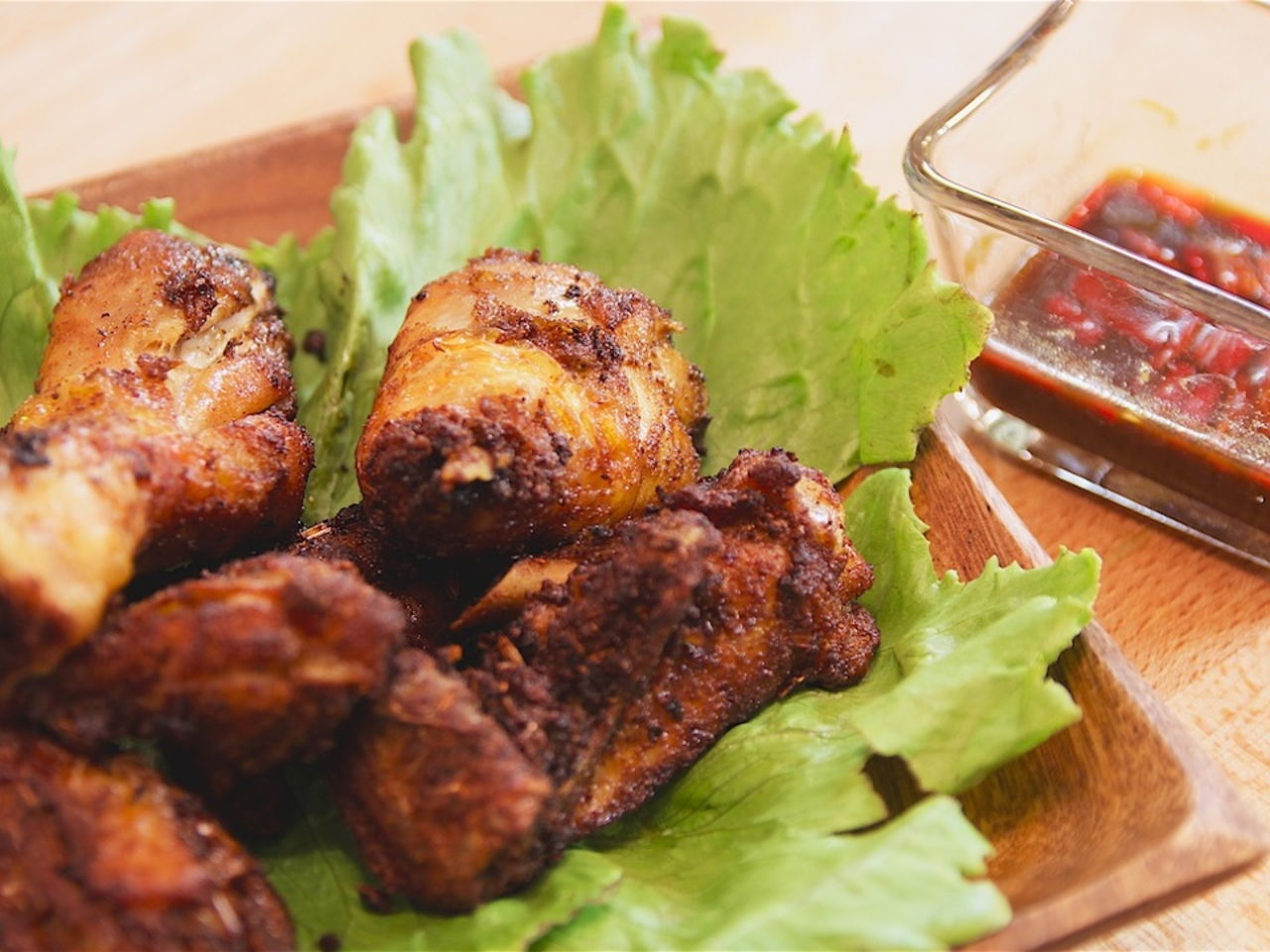
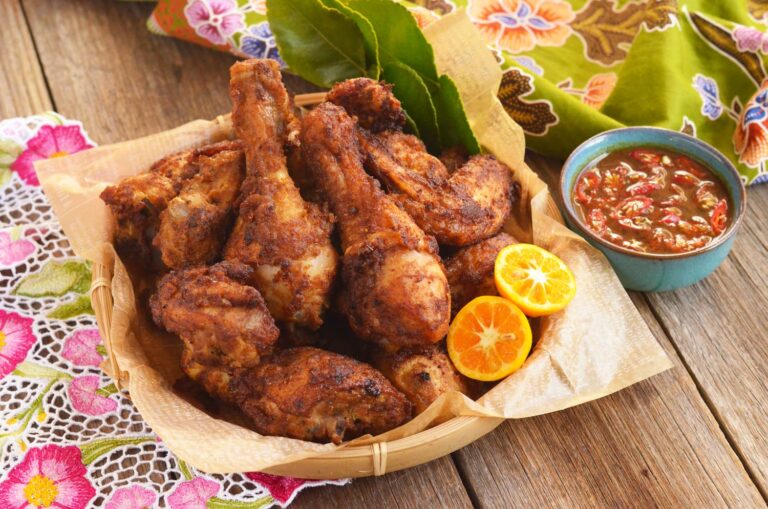
Inchi Kabin (also spelled Inche Kabin or Enche Cabin) is a classic Nyonya fried chicken dish most closely associated with Penang, with quieter roots in Melaka’s Peranakan kitchens. At first glance, it may look like just another plate of fried chicken, but one bite tells you otherwise. This is chicken that has been carefully marinated in spices and coconut milk, fried twice, and served with a sharp, tangy dipping sauce that hints at a very specific colonial past.
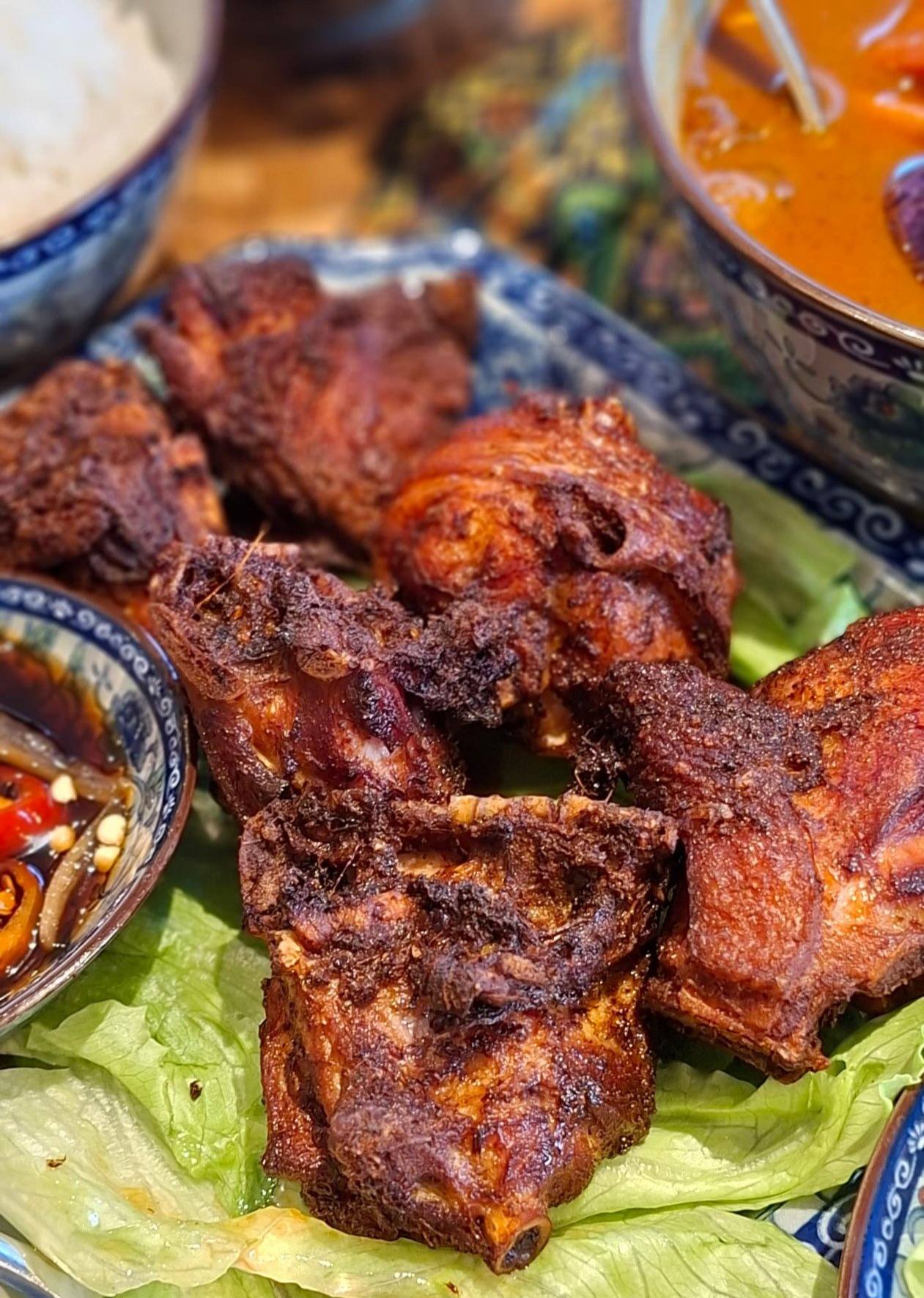
The preparation of Inchi Kabin is deliberate and patient. Chicken pieces, traditionally larger cuts like drumsticks, thighs, or wings, are marinated for hours or overnight. The marinade usually includes coconut milk for richness, ground spices such as clove, cinnamon, coriander, fennel, cumin, and black pepper, and sometimes coriander roots or lemongrass for added fragrance. Some cooks rely on ready-made five-spice powder, while others toast and grind individual spices to coax out deeper aromas. The chicken is first fried at a moderate heat to cook the meat through, then rested briefly before being plunged back into hotter oil. This second fry creates a crust that is crisp, dry, and aromatic, without tipping into bitterness.
The flavours are layered rather than aggressive. Warm spice notes linger in the background, softened by coconut milk, while the exterior crackles gently with each bite. What truly sets Inchi Kabin apart, though, is its dipping sauce. Worcestershire sauce, English mustard, lime juice, and fresh chilli come together in a sharp, savoury mix that cuts through the richness of the fried chicken. It is a pairing that feels unmistakably colonial, and that is no accident.
Peranakan cuisine itself was born from intermarriage between early Chinese migrants and local Malays, absorbing influences from both worlds and, later, from European colonisers. Inchi Kabin sits squarely in this crossroads. One popular account credits Hainanese cooks employed by wealthy Nyonya families in Penang as the creators of the dish. Another tells a more romantic story set aboard ships, where cooks would call out to sailors or officers resting in their cabins when the fried chicken was ready, shouting phrases like “Encik dalam kabin, makan sudah siap”. Over time, these words may have blurred into the curious name we know today. There is also a theory that the name evolved from a Hainanese phrase “yean chi ka pin” describing marinated slices of chicken, later reshaped by Hokkien-speaking Nyonyas. None of these explanations can be proven conclusively, and perhaps that uncertainty is part of the dish’s charm.
Today, Inchi Kabin is most often encountered in Nyonya restaurants or prepared at home for family meals and gatherings. It is not everyday hawker fare, but something brought out when a bit more effort is warranted. Some serve it simply with white rice, others alongside nasi lemak, letting the spiced chicken play against coconut rice and sambal. The dish has also adapted quietly over time, with variations in spice blends, chicken cuts, and sauces depending on household preference.
If you are served Inchi Kabin fresh from the fryer, eat it while it is still hot. The crust is at its best then, the spices most expressive, the sauce most lively. It is the kind of dish that reminds you how Peranakan food tells stories without ever announcing them, carrying traces of migration, domestic kitchens, and colonial influence in every crisp, fragrant bite.